
This easy asparagus risotto is creamy, delicious, and perfect for spring cooking. Made with simple ingredients, it delivers a rich, velvety texture with bright seasonal flavor. A classic Italian dish that’s effortless enough for weeknights yet elegant enough to impress.

Your reading this means you like risotto, right? So make sure to check out pea and pancetta risotto and the classic risotto alla Milanese. 🙂
Locally known as ‘risotto agli asparagi,’ this asparagus risotto is all about gentle cooking — slowly stirring hot stock into the rice to create that signature silky texture.
While asparagus is generally available year-round nowadays, it is twice as good when in season.
So now that we’ve officially started spring, have a go at it!
Jump to:
Why risotto agli asparagi is a keeper!
- Creamy without heavy cream. The texture comes from slowly stirred rice releasing its starch, giving you that luxurious creaminess without adding loads of dairy.
- Elegant but approachable. It looks and tastes impressive, yet it’s totally doable at home — even for beginner cooks.
- Customizable base recipe. Easy to tweak; add lemon zest, peas, mushrooms, or herbs depending on what you have on hand.
Ingredients

(See the recipe card below for measurements.)
- Olive oil – use extra virgin olive oil, if possible.
- Onion – a small one and finely chopped.
- White wine – I always use dry white wine when making risotto agli asparagi.
- Asparagus – remove the hard ends and chop them into about half an inch in length.
- Salt – use it to adjust the seasoning, especially when your stock is not fully seasoned.
- Stock – I typically use chicken stock.
- Butter – salted or unsalted butter is fine.
- Parmigiano Reggiano – freshly-grated, and more for serving.
- Rice – I use carnaroli for making this risotto agri asparagus, but feel free to use arborio rice if it’s what you have on hand.

How to make asparagus risotto
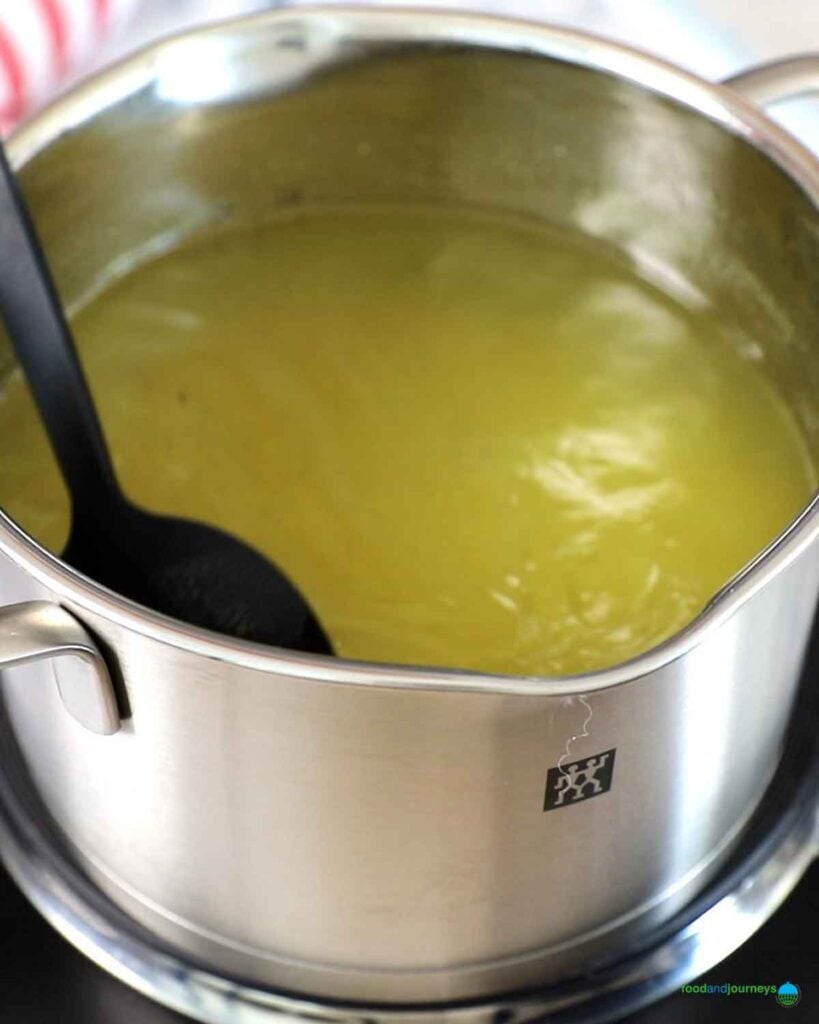
Prepare the stock.
Boil your stock and keep it simmering until the risotto is done.
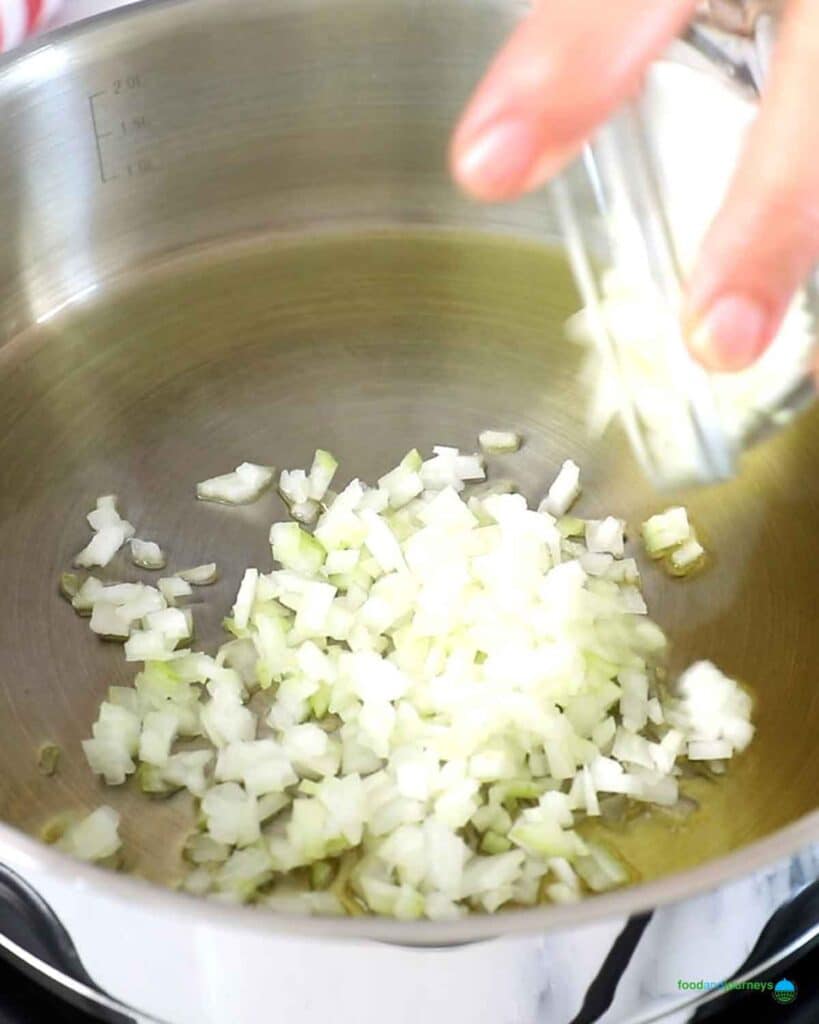
Sauté the onion.
Heat olive oil in a deep 24-cm pan (about 2 liters) over medium-high heat.
Add the chopped onion and saute until softened.
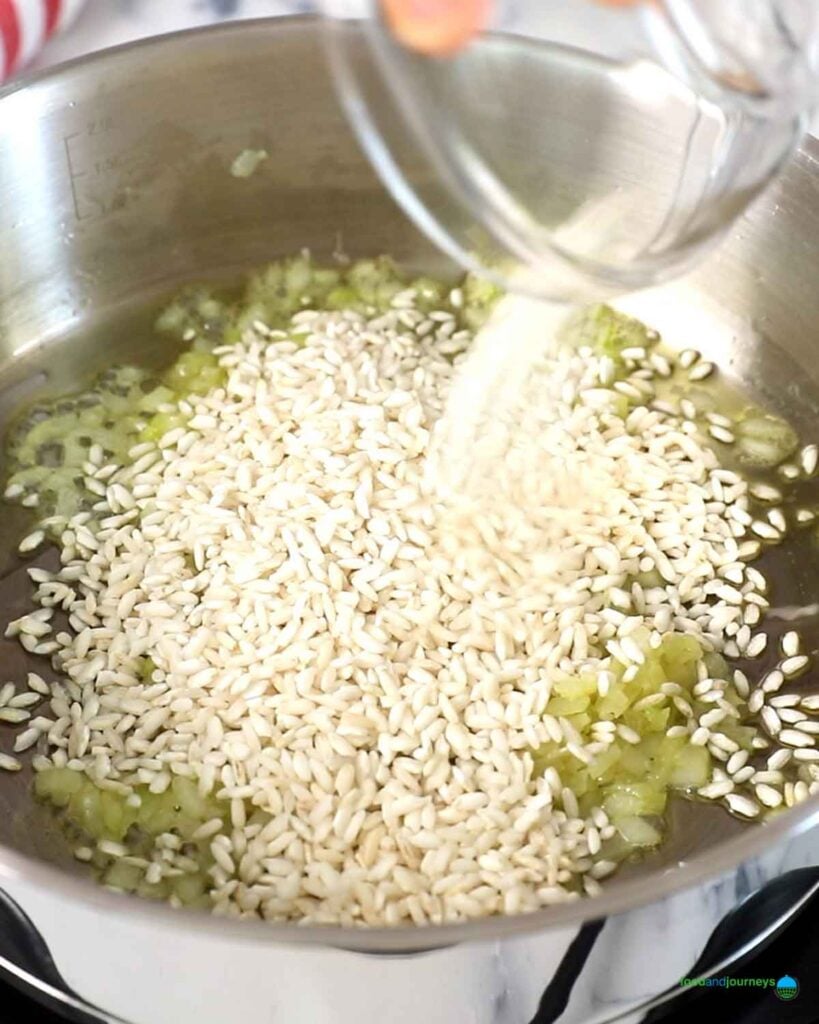
Toast the rice.
Add the rice. (Do NOT rinse it!).
Toast the rice for about a minute or two, stirring constantly and making sure that it’s coated with oil.
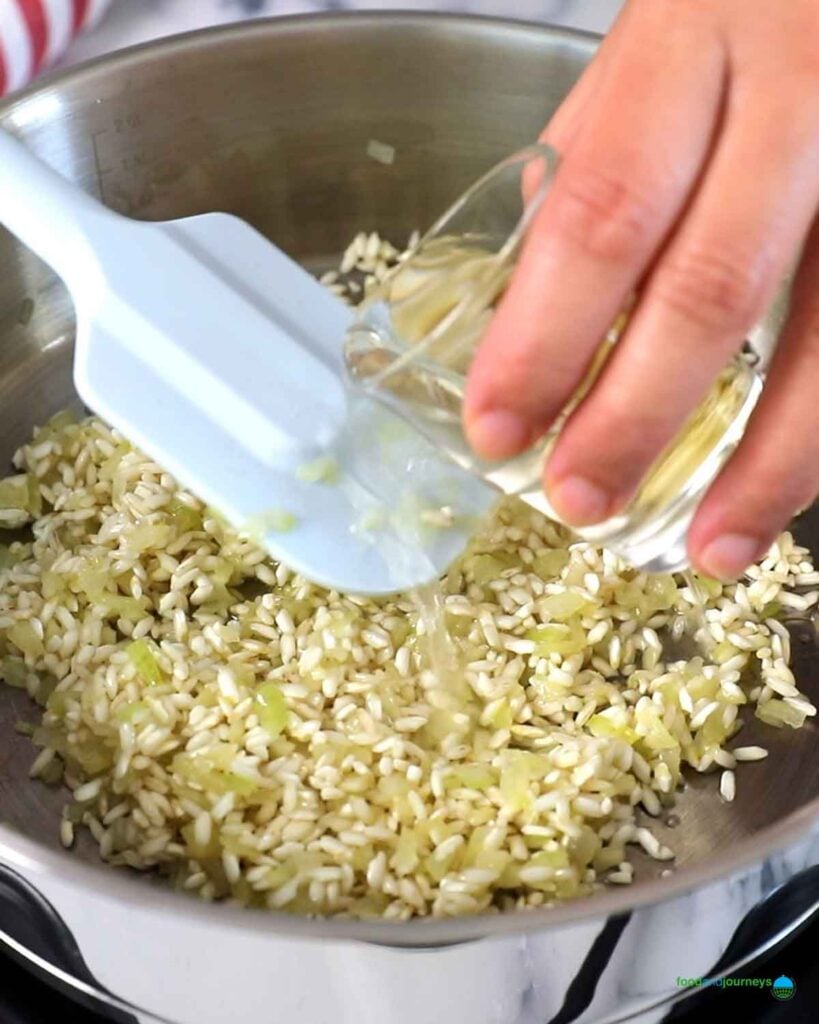
Let the wine evaporate.
Pour the white wine.
Stir and let the wine evaporate — by now, you will see the creaminess begin to come out of the rice.
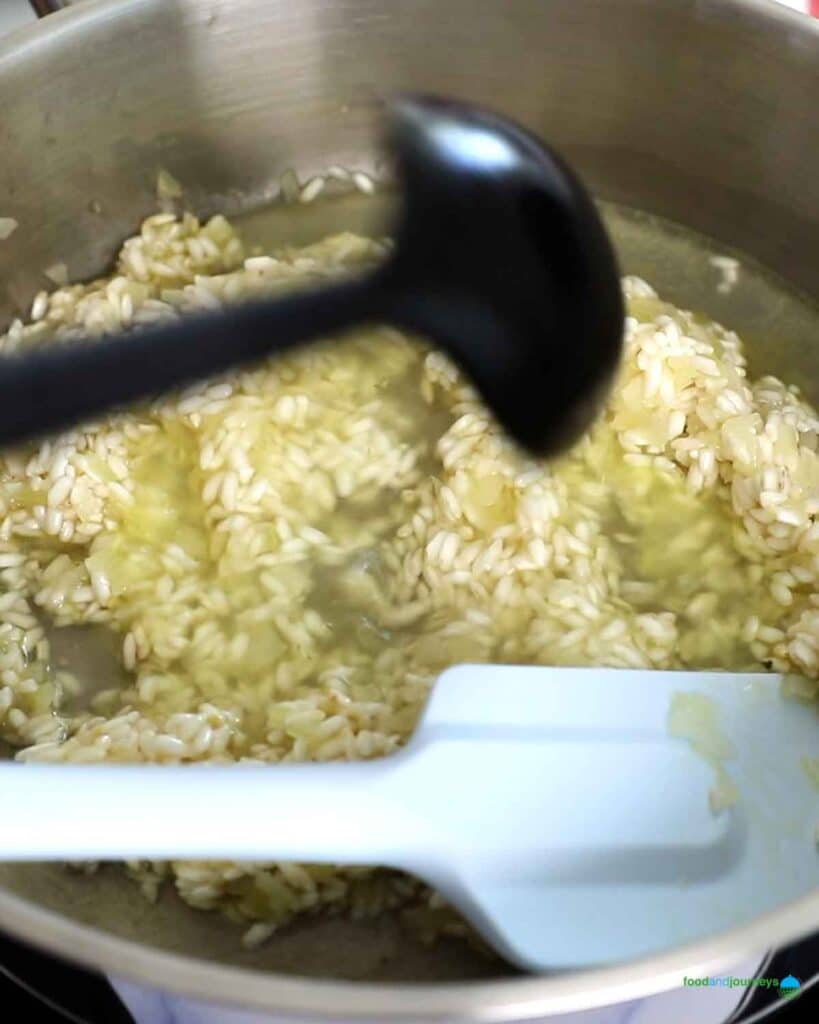
Cook with stock.
Add 2 to 3 ladles of the simmering stock.
Keep stirring until most of the liquid has evaporated, then add a couple more ladles of stock.
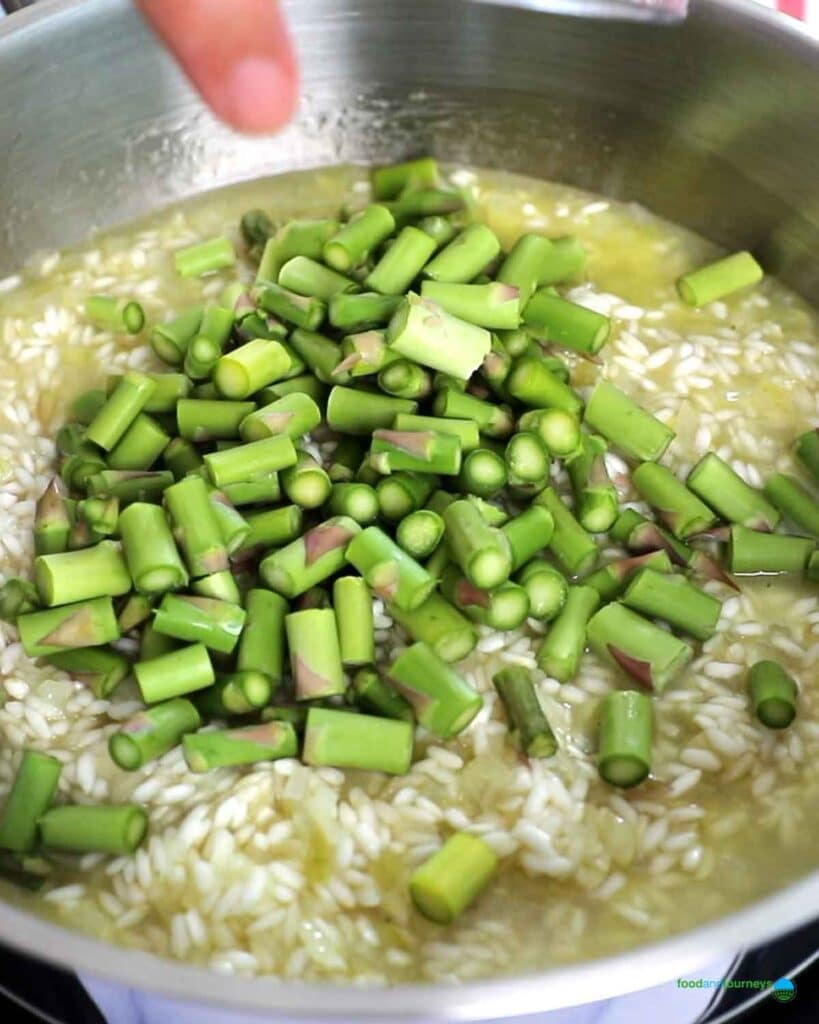
Cook the stems of the asparagus.
After about five minutes of stirring, add the hard parts of the asparagus.
Continue stirring and adding stock.
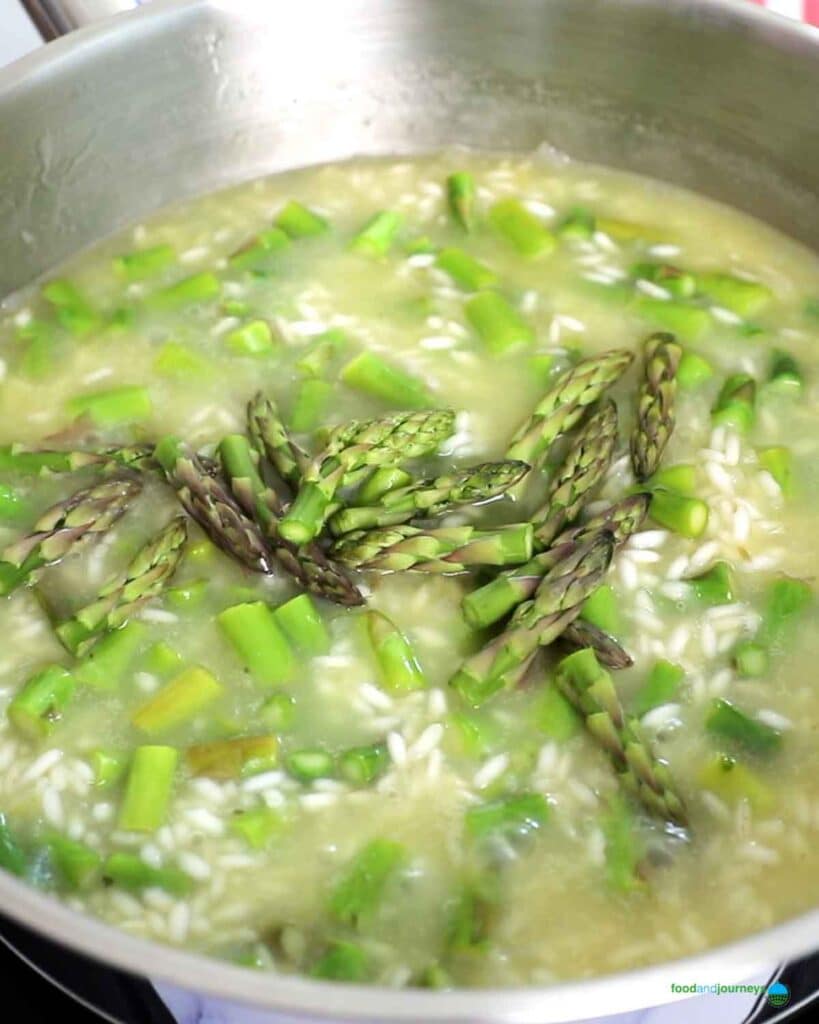
Cook the tips.
After another 5 minutes, add the chopped asparagus tips.
Continue stirring and adding the stock for about 10 more minutes, or until the rice is cooked — still with a bit of bite left.
Taste and adjust the seasoning by adding salt.
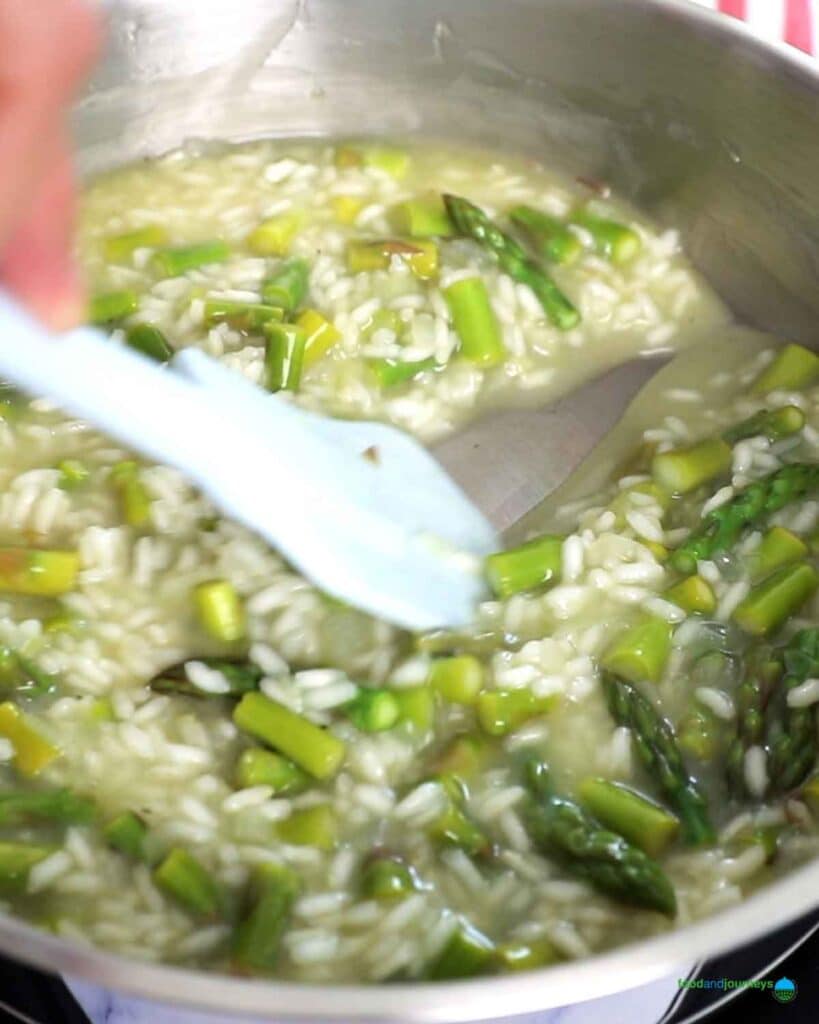
Look for the wave.
Before turning off the heat, check that you have enough liquid left.
Do this by gliding your spatula from one side of the pan to the center; you should see the liquid part, then slowly converge — almost like a wave.
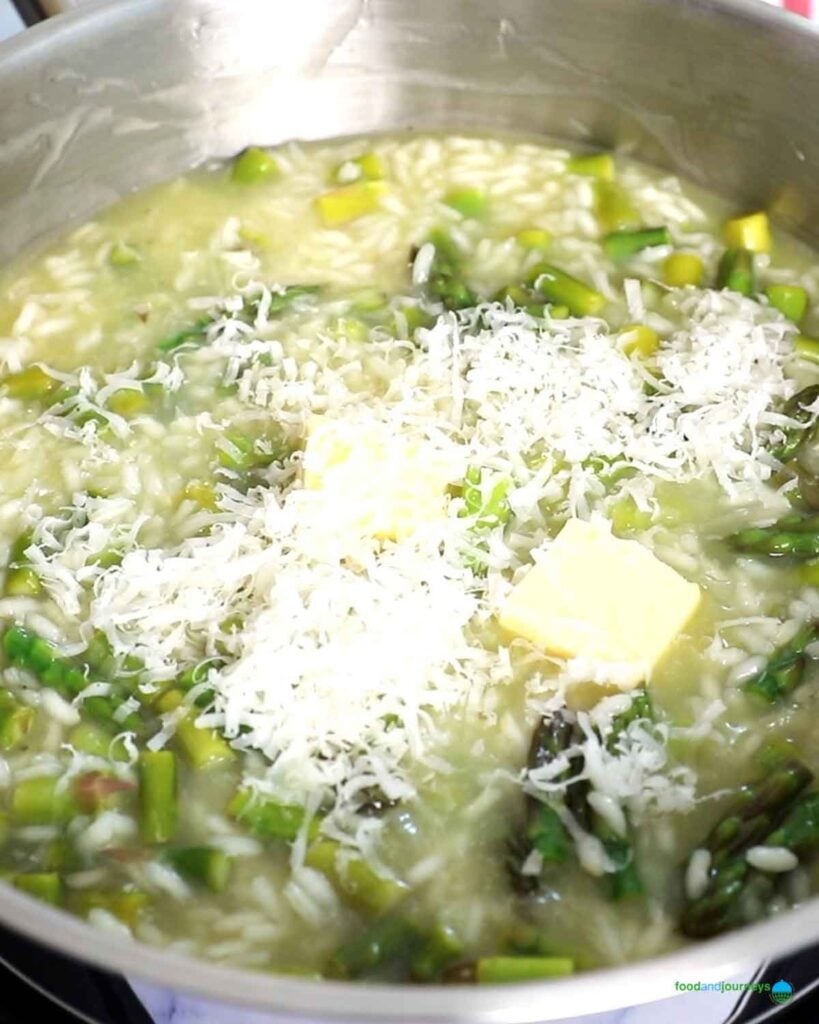
Finish cooking.
Turn the heat off and add the chilled butter and grated cheese.
Mix a bit to combine, cover with a lid, then remove the pan from the stove — let it sit for 2 minutes.
Transfer your asparagus risotto to plates.
Top with more grated cheese — then serve!

Helpful tips
- Remember to keep the stock simmering once it has boiled. It needs to be hot once it’s added to the rice, not lukewarm.
- You can chop the asparagus into a smaller size, if you prefer. Just make sure you adjust its cooking time as well.
- Do not hesitate to lower the heat while cooking the rice if you feel that medium-high is too much.
- The butter must be chilled to add creaminess to your asparagus risotto, not softened or at room temperature.
Recipe variation
- Stock. Vegetable stock will also work well with this risotto recipe.
- Cheese. You can use parmesan instead of parmigiano Reggiano if it’s what you have on hand.
- Blanching the asparagus. Blanching keeps them bright and slightly crispy, while cooking them directly in the risotto makes them softer and more integrated into the dish’s flavor.
Storage
Can I freeze asparagus risotto?
I don’t recommend it. Freezing changes the texture of the cooked rice, making it grainy and less creamy when reheated.
Can I make it ahead of time?
Asparagus risotto is best served fresh. You can try cooking it halfway, then add the asparagus tips later, and finish cooking just before serving.

FAQs
What rice is best for asparagus risotto?
Use carnaroli, arborio, or Vialone nano rice. These North Italian rice varieties release starch as they cook, creating that signature creamy risotto texture.
Do I need to stir risotto constantly?
You don’t need to stir nonstop, but frequent stirring is the key. It helps release the starch and prevents the rice from sticking to the pan — giving you a smooth, creamy dish.
Can I make it vegan?
Absolutely.
Use vegetable stock, skip the butter, and replace the Parmigiano Reggiano with a vegan alternative with a similar flavor.
Serving suggestions
Asparagus risotto is one of those dishes that can easily stand on its own. But if you want to turn it into a full Italian-inspired meal, try the rest of the classic Italian dishes below.
For more inspiration, explore the rest of our Italian recipes collection, where you’ll find other traditional dishes that will pair beautifully with risotto — from light starters to satisfying mains and desserts.

Serve this Tuscan bread salad with asparagus risotto for a fresh, vibrant contrast to its creaminess.
The juicy tomatoes, crisp vegetables, and light vinaigrette balance the richness of the risotto perfectly.

Serve this chicken stew from Emilia-Romagna for a hearty Italian meal that balances rich, savory flavor with a creamy, fresh side.
This pairing is perfect for both weeknight dinners and special occasions.

South Italy’s flourless chocolate cake is an excellent way to end a meal on a rich, indulgent note.
This almond-based, chocolatey cake is not heavy, and you can easily serve it with whipped cream or ice cream in warmer months.
Whether you’re new to making risotto or looking for a fresh seasonal twist, this recipe delivers a balanced dish that’s both light and satisfying.
So give this asparagus risotto a try and see just how delicious a homemade risotto can be. And if you do make it, I’d love to hear how it turned out — leave a comment or share your own twist! 🙂
GET MORE IDEAS FROM THIS LIST OF RICE DISHES FROM AROUND THE WORLD!
📖 Recipe

Easy Asparagus Risotto Recipe
Video
Equipment
- Medium-Sized Saucepan
- Medium-sized pan with a lid (24-cm; 2 liters)
- Ladle
Ingredients
- 2 to 3 tbsp olive oil
- 1 small onion, chopped finely
- 2/3 cup rice
- 1/3 cup white wine
- 3 1/2 to 4 cups stock
- 1 cup asparagus, chopped into 1/2-inch length
- 1 1/2 to 2 tbsp butter, chilled
- 1/3 cup Parmigiano Reggiano, grated (plus more for serving)
- salt, to season
Instructions
- Start by boiling the stock, then lower the heat and keep it simmering while you cook your risotto.
- Place a deep 24-cm pan (about 2 liters) over medium-high heat.
- Pour the oil and once it's ready, add the chopped onion — and saute until it softens.
- Add the rice. (NOTE: Do NOT rinse it!)
- Stir (toast) the rice for about 2 minutes, making sure that the grains are coated with oil.
- Pour the white wine.
- Stir and let it evaporate — at this point, you will see the creaminess coming out of the rice.
- Add 2 to 3 ladles of the simmering stock. Keep stirring until most of the liquid has disappeared, then add a couple more ladles of stock.
- After about 5 minutes of cooking, add the hard parts of the asparagus — continue stirring and adding stock.
- After another 5 minutes, add the chopped asparagus tips.
- Continue stirring and adding the stock for about 10 more minutes, or until the rice is cooked — still with a bit of bite left.
- Taste and adjust the seasoning by adding salt.
- Before turning off the heat, check that you have enough liquid left.
- Do this by gliding your spatula from one side of the pan to the center; you should see the liquid part, then slowly converge — almost like a wave.
- Turn the heat off and add the chilled butter and grated cheese. Mix a bit to combine, cover with a lid, then remove the pan from the stove — let it sit for 2 minutes.
- Transfer your asparagus risotto to plates.
- Top with more grated Parmigiano Reggiano — serve and enjoy!
Notes
- Cook’s Tip: Remember to keep the stock simmering. It needs to be hot when added to the rice, not lukewarm.
- Refer to the post for more tips and suggestions.



Leave a Reply