Food and Journeys®

  • WORLD CUISINES
  • HOW-TOS
  • ABOUT
    • About Me
    • Notes on Copyright
    • Privacy Policy
menu icon
go to homepage
  • Categories
  • Countries
  • Global Pantry
  • Subscribe
  • Privacy Policy
    • Facebook
    • Pinterest
    • YouTube
  • search icon
    Homepage link
    • Categories
    • Countries
    • Global Pantry
    • Subscribe
    • Privacy Policy
    • Facebook
    • Pinterest
    • YouTube
  • ×
    Home » Recipes » Bread

    Khobz (Moroccan Bread)

    Published: Mar 25, 2023 · Modified: Apr 25, 2026 by Neriz · This post contains some affiliate links.

    Jump to Recipe

    Khobz is a traditional Moroccan bread that you can easily prepare!  Only five ingredients and no-fuss preparation — try it once, and you will surely make it regularly at home!

    Two loaves of traditional Moroccan bread.

    Crusty on the outside, but soft on the inside — that’s the best way to describe this round Moroccan bread.

    Khobz is the kind of bread that proves you don’t need complicated techniques to create something truly satisfying.  With just a few basic ingredients and simple steps, you get a rustic, golden loaf that’s meant to be shared and enjoyed every day.

    It’s one of my go-tos when I’m planning to serve it as both an appetizer and an accompaniment to my favorite mains.

    For an appetizer, it’s excellent with cheese or cured meat, or you can just dip it in olive oil — and for mains, it’s great for cleaning your plate. 😉

    Jump to:
    • What is khobz?
    • Ingredients
    • How to make khobz
    • Helpful tips
    • Recipe variation
    • FAQs
    • Serving suggestions
    • 📖 Recipe

    What is khobz?

    Khobz is the Arabic word for bread, and locals call this traditional Moroccan round bread by the same name.

    Characterized by its crisp crust and soft, slightly dense interior. It’s commonly used to scoop food or absorb sauce and oil, rather than being sliced for making sandwiches.

    Traditionally, it’s cooked in communal wood-fired ovens.  

    But since we don’t have that, we will set our oven to a high temperature instead — and use a pizza stone to mimic the same temperature at home.

    You can enjoy it for breakfast with some marmalade and a cup of coffee, or serve it as an accompaniment for your favorite soup for a light lunch.

    My favorite is to have it at arm’s reach whenever we have stew for dinner.

    Khobz is excellent for absorbing the sauce off your plate — and with its neutral flavor, it lets the main dish shine without overpowering it.

    Doubtful?  You should try it with other classic Moroccan dishes.

    Start with zaalouk, also known as Moroccan eggplant salad — and judge for yourself! 🙂

    Ingredients

    All the ingredients you need to make khobz at home.

    (See the recipe card below for measurements.)

    • Flour – you would need bread flour to make this khobz recipe. Using all-purpose flour will be tricky because it has less moisture than bread flour.
    • Yeast – I always use active dry yeast, but you can easily use instant dry yeast; keeping it simple, so we only combine it with warm water.
    • Olive oil – extra virgin olive oil, if possible, and you would need more for greasing your hands when forming your Moroccan bread loaves. 
    • Salt – just use your favorite brand.
    • Semolina flour – it’s not in the image above, because it’s optional. I use it to dust khobz before it goes into the oven, but all-purpose flour works as well.
    A freshly-baked loaf of khobz, with slices ready for serving.

    How to make khobz

    Start by preparing the yeast.  Mix warm water with the yeast, then set aside until it’s foamy.  

    Note: Make sure the water is not too hot, or it will kill the yeast. A temperature of 41°C to 46°C (105°F to 115°F) is ideal.
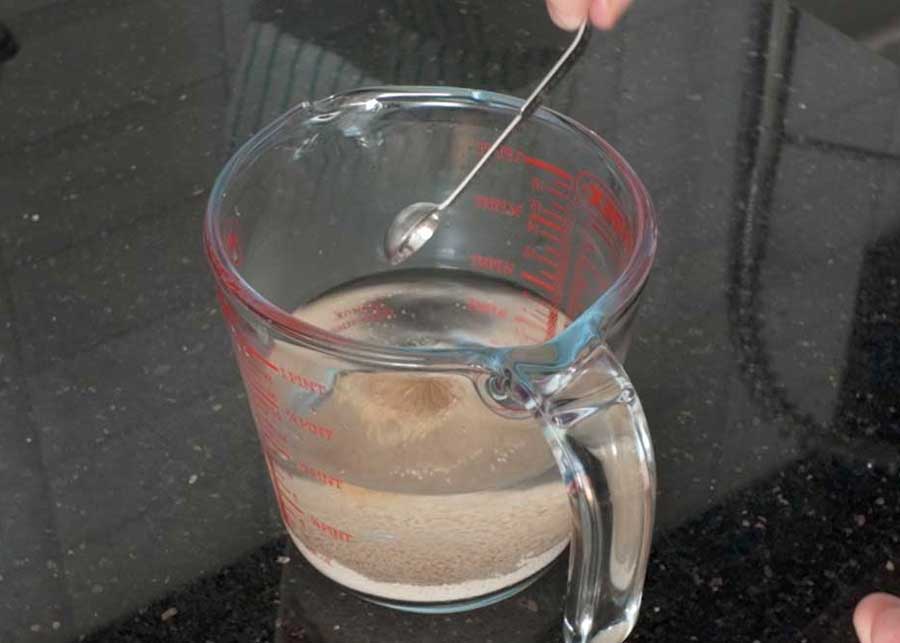
    Mixing warm water with yeast, to be used for making Moroccan bread dough.

    Prepare the dough. Mix the bread flour and salt in a stand mixer bowl, then add the olive oil and the yeast mixture (once it’s ready).
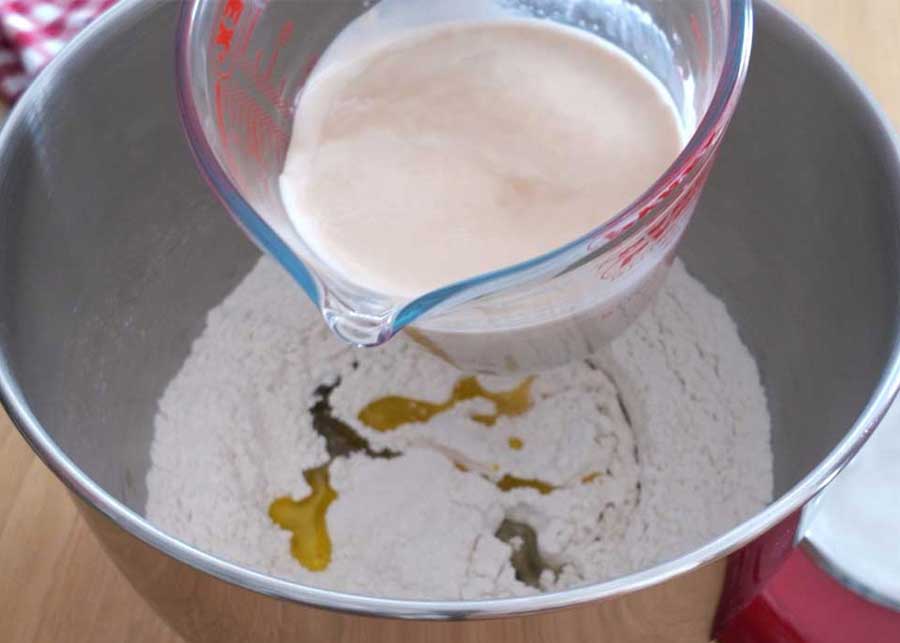
    Combining all the dry ingredients, plus the yeast mixture in a mixing bowl, for making homemade khobz.

    Mix and knead the dough until it is smooth.  It should be neither sticky nor dry, so do not hesitate to add a bit of water if you think the dough needs it.
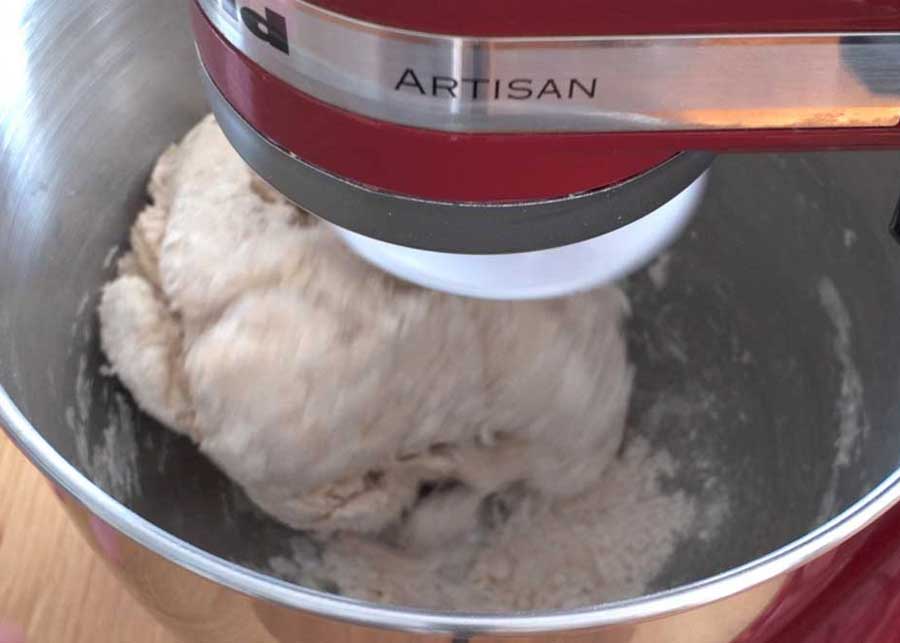
    A stand-mixer is used in this recipe for making round Moroccan bread at home, but kneading by hands is also ok.

    Form the dough into a ball and wipe the bowl with more oil.  Place the dough in the bowl and cover with a kitchen cloth.

    Set aside in a warm place for 30 to 45 minutes.
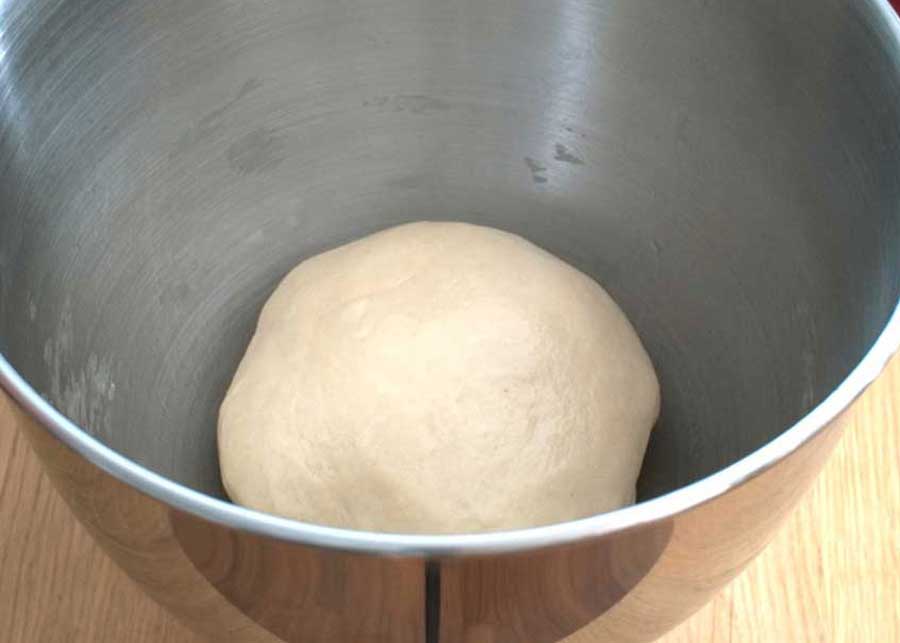
    The ball of smooth khobz dough is placed in an bowl for proofing.

    Remove the dough from the bowl and dust your countertop with more flour — semolina or all-purpose will be fine.

    Divide the dough into two portions, and place one portion back into the bowl, keeping it covered.
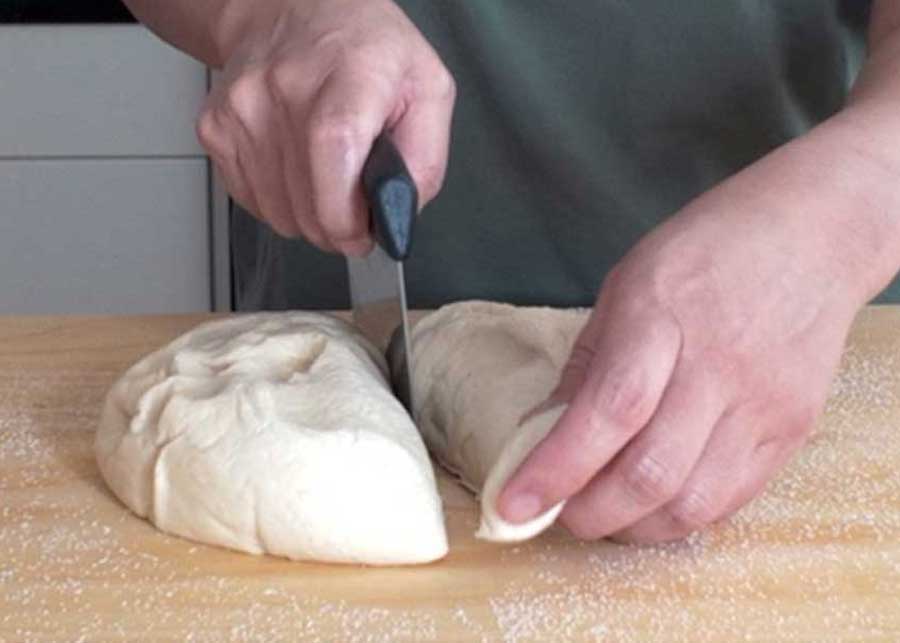
    Dividing the dough into two portions of Moroccan bread.

    Form the first portion into a small ball and place it on a baking tray lined with parchment paper.
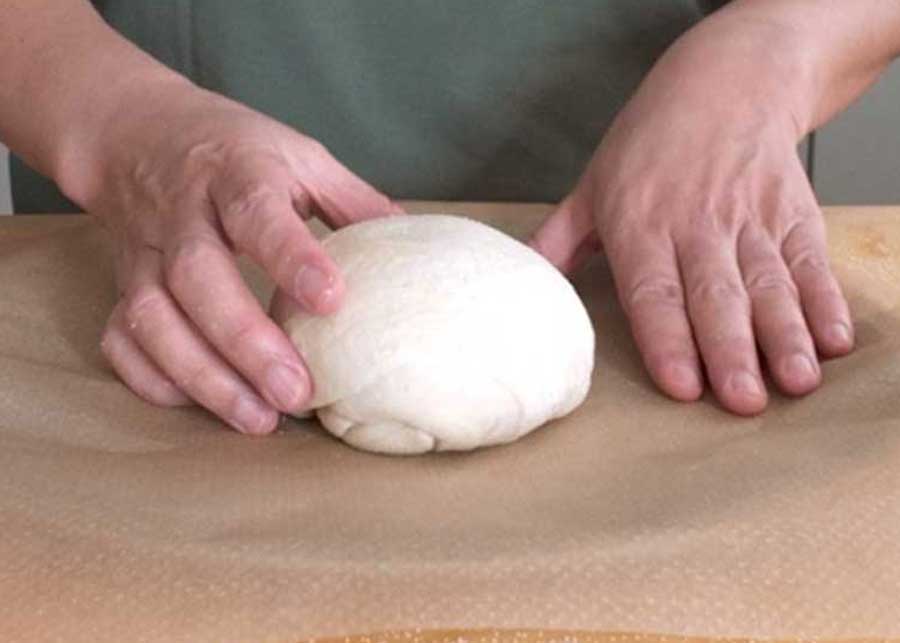
    Forming a ball for each portion of khobz.

    Form the traditional Moroccan bread by coating your palms with more olive oil, then use your hands to flatten and push the dough outward, forming a circle as you go.  Aim for a diameter of 18 to 22 cm.
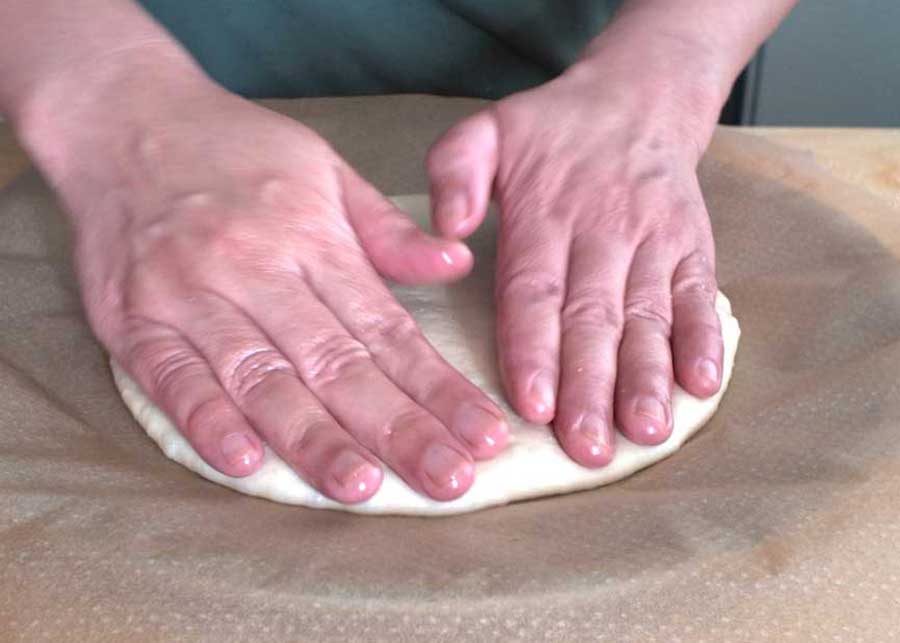
    Then forming a circle to get that typical shape of khobz.

    Sprinkle the bread with flour.  All-purpose flour is ok, but semolina flour will add a bit more crunch to the bread.
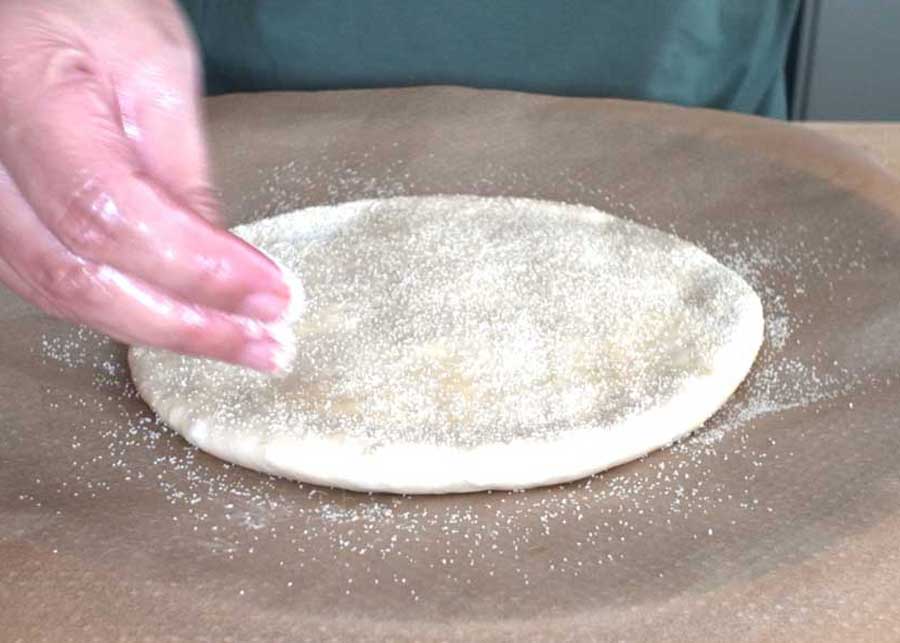
    Semolina flour on top helps in giving that crunchy exterior of round Moroccan bread.

    Cover with plastic to prevent the bread from rising too high after proofing — this is the traditional shape of khobz.  
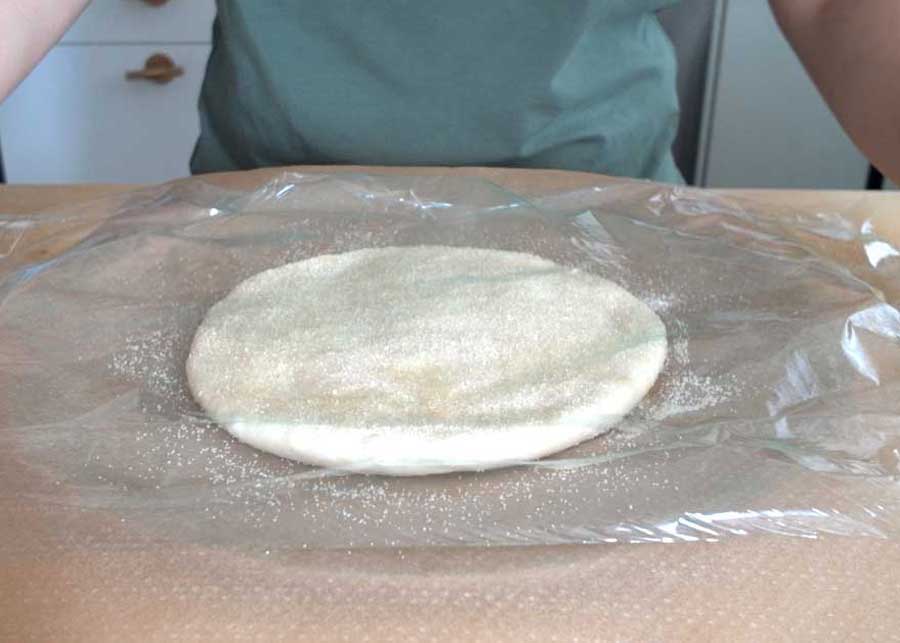
    Covering with plastic, then kitchen towel to achieve the traditional shape of khobz.

    Cover with a kitchen cloth, tucking the ends under the tray.  Then set it aside in a warm place for 60 to 90 minutes.

    Do the same process for the second portion of the dough.

    Prepare the dough for baking by uncovering it and using a fork to make random pricks on the surface of the khobz.  
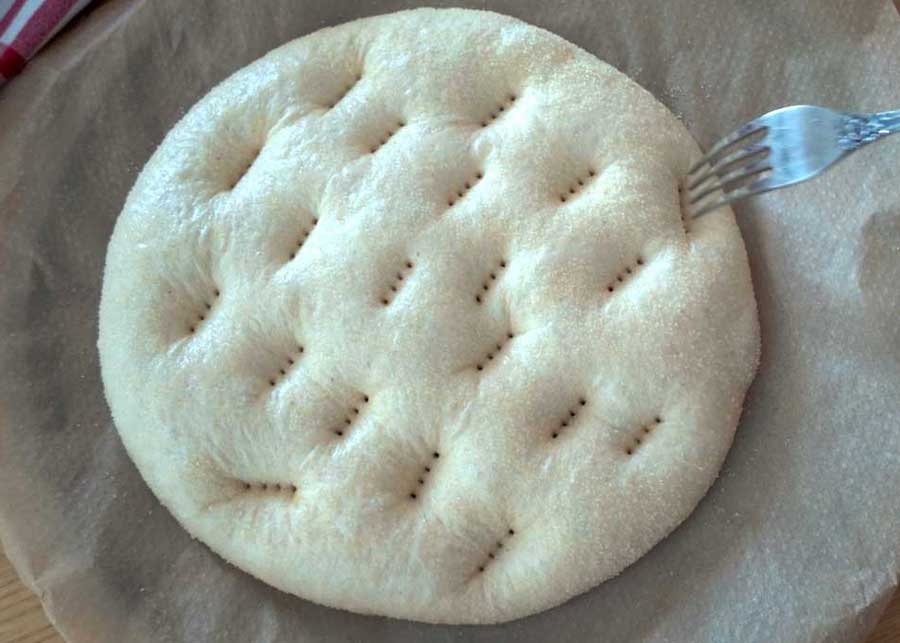
    Making holes on top before the classic Moroccan bread goes into the oven for baking.

    Place it in the oven for 20 to 25 minutes, until golden brown or until it sounds hollow when you tap it.
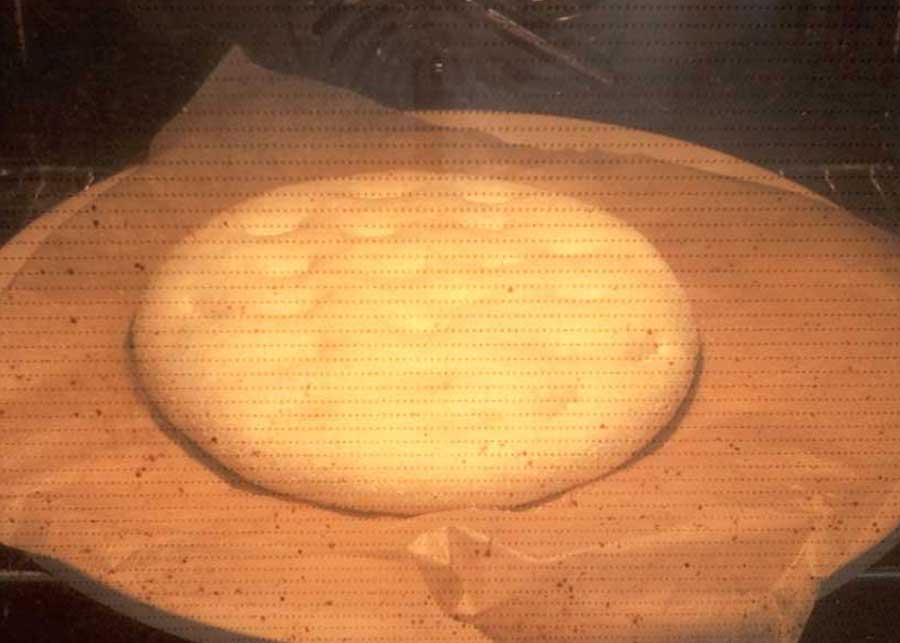
    Khobz now in the oven, using a pizza stone to mimic wood fired ovens.

    Remove the freshly baked round Moroccan bread from the oven and place it on a rack to cool.

    Slice (or tear) and serve!

    A newly baked khobz on a cooling rack.

    Helpful tips

    • Remember to grease your hands with olive oil when forming the loaves.  It helps in giving that lovely golden color to every loaf of khobz.
    • You can use a rolling pin to flatten the dough if you prefer.  However, I think using my hands is easier, so I never bother using anything else.
    • Tucking the kitchen towel under your baking tray helps ensure the khobz loaves do not rise too much — keeping its traditional shape.

    Recipe variation

    • Number of loaves.  If you want smaller loaves, you can divide the dough into three equal portions instead of the suggested two.
    • Pizza stone.  While a regular baking tray in the oven is perfectly fine, a pizza stone helps mimic the temperature of the wood fire ovens used for baking khobz.  So, if you have one, make sure you use it!

    For reference, I preheat the oven with the pizza stone inside for at least 30 minutes (as when making homemade pizza), then place the Moroccan bread loaf on the stone and cook as usual.

    As shown in the video, I keep the parchment paper because it makes it easier to place the dough on the stone — and to remove the scalding-hot bread afterward.

    A closer shot of the inside of Moroccan bread, highlighting its texture.

    FAQs

    How should I store it?

    Make sure it’s completely cooled, then place khobz in a paper bag for two days (tops) — keep the bag closed.

    Can I freeze khobz?

    Yes.  Once it’s cooled, wrap it tightly and place it in the freezer for a month.  

    When you intend to serve it, just reheat in the oven and remove when its back to its original texture.

    Serving suggestions

    It’s great with stews, salads, dips, or just a drizzle of extra-virgin olive oil. But as always, it pairs best with other classic Moroccan recipes like:

    • Loubia (Moroccan White Bean Stew)
    • Bessara (Moroccan Split Pea Soup)

    So, if you’ve been thinking about trying homemade bread, this is the perfect place to start.  

    Khobz is a beginner-friendly, forgiving dough — the kind of recipe that builds confidence from the very first bake.

    Give it a try, and once you break into that warm loaf, you might just find yourself making it again and again! 

    GET MORE IDEAS FROM THIS LIST OF INTERNATIONAL BREAD RECIPES!

    📖 Recipe

    Feature image for khobz, showing two loaves of the Moroccan bread on top of each other.

    Khobz Recipe (Moroccan Bread)

    Khobz is a traditional Moroccan bread that you can easily prepare!  Only four ingredients and no-fuss preparation — try it once, and you will surely make it regularly at home!
    5 from 1 vote
    Print Pin Rate
    Course: Bread
    Cuisine: Moroccan
    Prep Time: 35 minutes minutes
    Cook Time: 25 minutes minutes
    Resting Time: 2 hours hours
    Total Time: 3 hours hours
    Servings: 2 loaves
    Calories: 1223kcal
    Author: Neriz

    Video

    Equipment

    • Pyrex Measuring Cups
    • Measuring Spoons
    • Mixing Bowls
    • Stand Mixer
    • Dough Cutter
    • Rectangular Baking Tray
    • Pizza Stone

    Ingredients

    • 2 & 1/4 teaspoons yeast
    • 500 grams flour (about 3 & 3/4 cups)
    • 2 teaspoons salt
    • 5 tablespoons olive oil, plus more for greasing hands
    • 300 ml warm water (about 1 cup + 6 tablespoons)
    • semolina flour, for dusting (optional)

    Instructions

    • Combine yeast with warm water.  Mix, then set aside until it’s ready.
    • Mix flour and salt in a large bowl (or stand mixer bowl).
    • Add the yeast mixture and olive oil.
    • Mix and knead until you get a smooth dough — either by hand or with a stand mixer.
    • Form the Moroccan bread dough into a ball and place it in an oiled bowl.
    • Cover with a kitchen towel and set aside for thirty minutes.
    • Divide the khobz dough into two portions.
    • Rub your hands with more olive oil, then form a ball for each part.
    • Place one portion on a parchment-lined tray and use your greased palm to flatten it.  Keep pressing and stretching the dough to the sides to make it bigger (like making a pizza).
    • Sprinkle a bit of semolina or all-purpose flour on top.
    • Cover with plastic wrap, then a kitchen towel, and keep it tightly covered by tucking the towel's edges under the tray.
    • Do the same for the remaining portion, then set aside both portions for sixty to ninety minutes.
    • Preheat your oven to 225°C (430°F) — if you have a pizza stone, use it and preheat it as well.
    • Uncover the dough and use a fork to prick some holes on top.
    • Place the dough in the oven for 20 to 25 minutes — or until it turns golden and you hear a hollow sound when tapping it.
    • Remove your khobz from the oven and set aside to cool slightly — then slice and serve!

    Notes

    • Cook’s Tip:  Do not forget to grease your hands with olive oil when forming the loaves.  It helps in giving that lovely golden color to every loaf of khobz.
    • Refer to the post for more tips and suggestions.

    Nutrition

    Calories: 1223kcal | Carbohydrates: 183g | Protein: 31g | Fat: 39g | Saturated Fat: 5g | Polyunsaturated Fat: 5g | Monounsaturated Fat: 26g | Sodium: 2333mg | Potassium: 284mg | Fiber: 7g | Sugar: 1g | Vitamin A: 5IU | Vitamin C: 0.01mg | Calcium: 40mg | Iron: 3mg
    Tried this Recipe? Pin it for Later!Mention @foodandjourneys or tag #foodandjourneys!

    More Bread from Around the World

    • Feature image featuring a quarter portion of a Lebanese bread with onions and walnuts, focusing on the filling with these two main ingredients.
      Lebanese Onion and Walnut Bread
    • A closer shot of Swedish breakfast rolls, highlighting the crunchy sunflower seeds, and the golden colour of the bread.
      Swedish Bread Rolls
    • A closer shot of a freshly baked Focaccia Genovese, highlighting its golden color.
      Focaccia Genovese
    • Freshly baked Swedish rye rolls cooling on a rack.
      Swedish Rye Rolls (Rågfrallor)
    5 from 1 vote (1 rating without comment)

    Leave a Reply Cancel reply

    Your email address will not be published. Required fields are marked *

    Recipe Rating


    This site uses Akismet to reduce spam. Learn how your comment data is processed.

    Updated image for sidebar, 2026.

    Hej there!

    A smorgasbord of traditional and delicious international recipes awaits you, so feel free to look around and pick your favorites. No need to leave your kitchen to experience the real deal!

    More about me →

    Image for listing as-featured-on

    Spring Favorites!

    • Feature image for Semla, showing a bunch of semlor in a cooling rack.
      Semla (Semlor or Swedish Lent Buns)
    • Feature image for asparagus risotto, showing a serving of it, topped with grated parmigiano.
      Easy Asparagus Risotto (Perfect for Spring!)
    • Feature image for Lebanese lentil soup with lemons, showing a serving of the dish.
      Lebanese Lemon Lentil Soup (Adas Bhamod)
    • A plate of Swedish dill potatoes, with new potatoes and fresh dill on the background.
      Swedish Dill Potatoes (So CREAMY!)
    • Latest (Mar23) feature image for pan di ramerino.
      Pan di Ramerino (Easter Bread with Raisins)
    • Feature image for Melopita, showing a slice with honey poured on it.
      Melopita (Greek Honey Pie)
    • Latest feature image for Italian orange and carrot cake, Jan23.
      Italian Orange and Carrot Cake
    • Latest feature image for Finnish Carrot Bread, showing the texture of the inside of the rolls.
      Finnish Carrot Bread Rolls

    Popular Posts

    • Two servings of German Potato Soup (Kartoffelsuppe). Both creamy potato soup servings are garnished with spring onions.
      German Potato Soup (Kartoffelsuppe)
    • A closer shot of kanelbullar on a cooling rack, highlighting the filling of the buns.
      Swedish Cinnamon Buns (Kanelbullar)
    • A pan of pollo al ajillo, fresh out of the stove, ready for serving.
      Spanish Garlic Chicken (Pollo Al Ajillo)
    • Arroz de Tomate in a pan, ready for transferring to serving plates, with fresh cherry tomatoes next to it.
      Portuguese Tomato Rice (Arroz de Tomate)
    • Latest feature image for drommekage, highlighting the texture of the cake.
      Danish Dream Cake (Drømmekage)
    • Three freshly-baked pasticciotti sprinkled with powdered sugar and served wiith espresso.
      Pasticciotto (Italian Cream Filled Pastry)
    • An image showing two bowls of Finnish Salmon Soup served with some bread.
      Finnish Salmon Soup (Lohikeitto)
    • An overhead shot of a bunch of freshly baked taralli, served with a shot of espresso, with scaterred fennel seeds on the background.
      Taralli (Italian Crackers)
    • Swedish Almond Tart
      Swedish Almond Tart
    • Latest feature image (Apr23) for Filipino picadillo showing the dish on a plate.
      Filipino Picadillo
    • Latest feature image for Salt and Pepper pork belly, showing the slices garnished with more chili.
      Salt and Pepper Pork Belly
    • A slice of cardamom sponge cake, served with a cup of coffee.
      Swedish Cardamom Cake

    Favorite Snacks

    • Fried panzerotti served with a glass of wine, for snack.
      Panzerotti (Panzarotti)
    • A collage of flammkuchen toppings to choose from.
      Classic Flammkuchen (+ More Flammkuchen Toppings!)
    • Freshly cooked panelle from Palermo, served with a dustingg of ground black pepper.
      Panelle (Sicilian Chickpea Fritters)
    • Chocolate balls served with coffee, for afternoon snack.
      Swedish Chocolate Balls (Chokladbollar)

    Popular Cuisines

    • Latest feature image for authentic Swedish recipes, showing västerbottenostpaj, a midsummer favorite.
      Authentic Swedish Recipes
    • Feature image for Italian recipes by region post.
      Italian Recipes by Region
    • Feature image for German Recipes post.
      Authentic German Recipes
    • Feature image for Portuguese Recipes, as part of recipes by country.
      Easy Portuguese Recipes
    • Feature image for Traditional Spanish Recipes, a pan of espinacas con garbanzos.
      Traditional Spanish Recipes
    • Feature image for Finnish Recipes post.
      Easy Finnish Recipes
    • Feature image for Greek Recipes post.
      Traditional Greek Recipes
    • Feature image for Lebanese Recipes post.
      Lebanese Recipes

    Footer

    Policy

    • Privacy Policy

    Contact

    • About Me

    Copyright

    • Notes on Copyright

    A PARTICIPANT IN THE AMAZON ASSOCIATES PROGRAM, AN AFFILIATE ADVERTISING PROGRAM DESIGNED TO PROVIDE A MEANS FOR SITES TO EARN ADVERTISING FEES BY ADVERTISING AND LINKING TO AMAZON.COM.

    Copyright © 2026. FOOD AND JOURNEYS®

    Rate This Recipe

    Your vote:


    A rating is required
    A name is required
    An email is required

    Recipe Ratings without Comment

    Something went wrong. Please try again.