
Lebanese onion and walnut bread is a soft, delicious bun generously filled with sweet caramelized onions and crunchy walnuts. It’s the perfect balance of nutty, slightly sweet, and deeply savory — perfect with tea, alongside soups, or as part of a mezze spread.
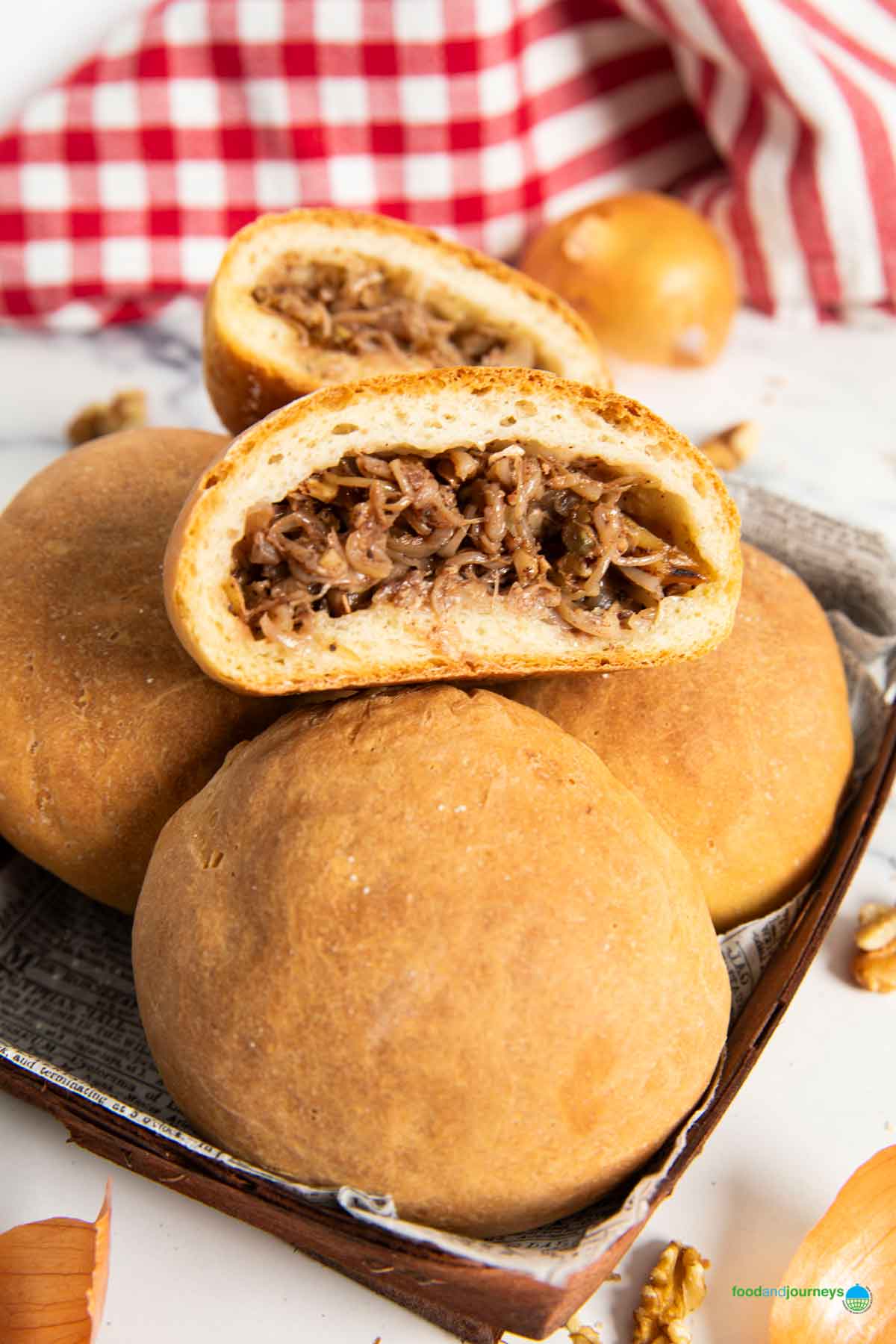
If you love bold flavors and rustic bakes, this is for you.
Baking Lebanese onion and walnut bread at home is a beautiful way to experience the charm of Lebanese cuisine.
You don’t really need any hard-to-find ingredients or complicated machines — just patience. 🙂
But it’s absolutely worth it. It’s the kind of bread that quietly becomes a household favorite.
Jump to:
Why this Lebanese stuffed bread is a keeper!
- Big flavor, simple ingredients. Sweet, caramelised onions and earthy walnuts create a rich, savory filling with pantry staples, and you can even knead the dough by hand.
- Perfect sweet-savory balance. The natural sweetness of slow-cooked onions pairs beautifully with the slight bitterness of walnuts and the classic spices, rounding everything out.
- Versatile for any occasion. Serve them with soup, add them to a mezze spread, pack them for lunch, or simply enjoy one with tea — they fit almost anywhere.
Ingredients
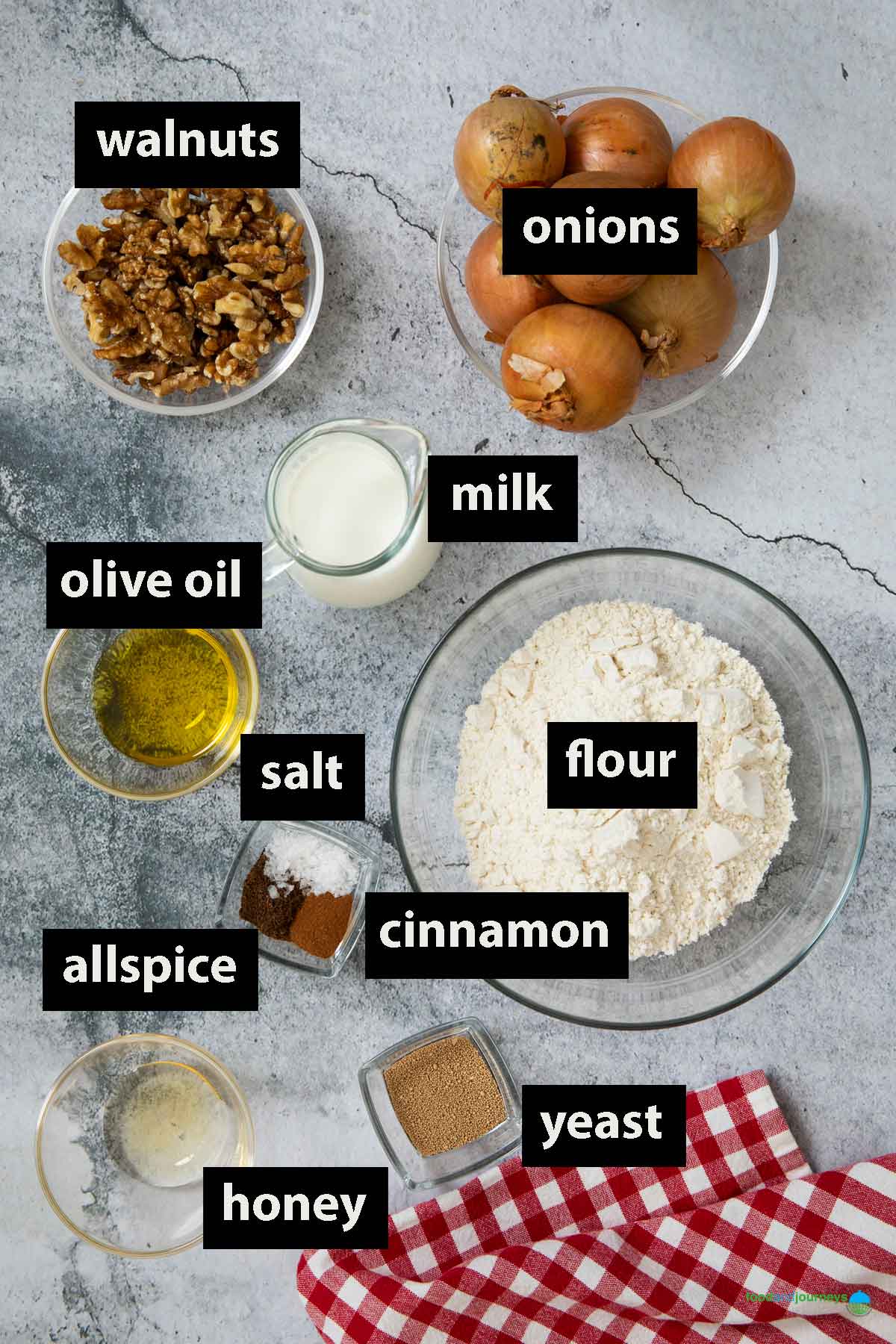
(See the recipe card below for measurements.)
- Flour – you will need a mix of all-purpose and bread flour for a fluffier result.
- Yeast – I generally use active dry yeast.
- Honey – it’s a tiny amount for a hint of sweetness to the dough, so use what you have on hand.
- Milk – I typically use whole milk and then warm it up for mixing with the yeast.
- Olive oil – use extra virgin olive oil, if possible.
- Onions – as you can see from the image above, I use yellow onions. But red ones are also ok, as mentioned in the recipe variation section below.
- Walnuts – toasted; so, keep an eye on them so they don’t end up burned. 😉
- Seasoning and spices – use your favorite brand for salt, ground allspice, and cinnamon powder.

How to make Lebanese savory bread

Prepare the yeast.
Combine the yeast with warm milk, then set it aside until it becomes foamy.
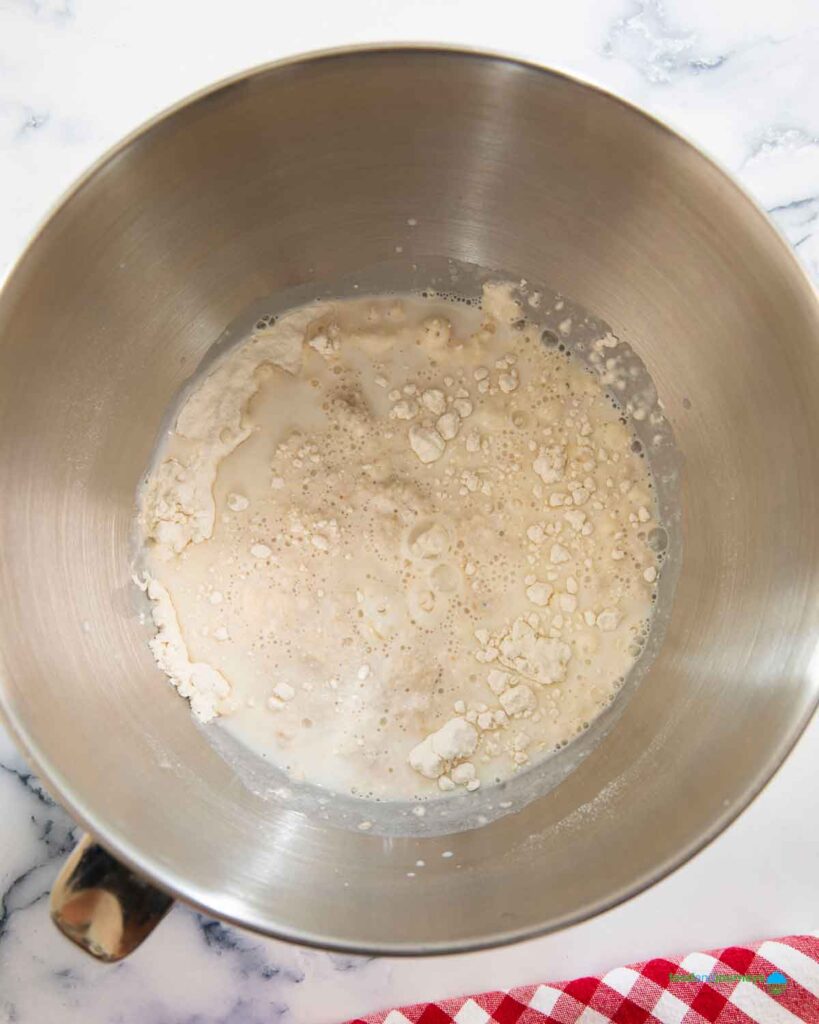
Mix the dough ingredients.
Combine the flour and 1/2 teaspoon of salt in a stand mixer bowl, or a regular bowl if kneading manually.
Add the honey, yeast mixture, and 4 tablespoons of warm water.
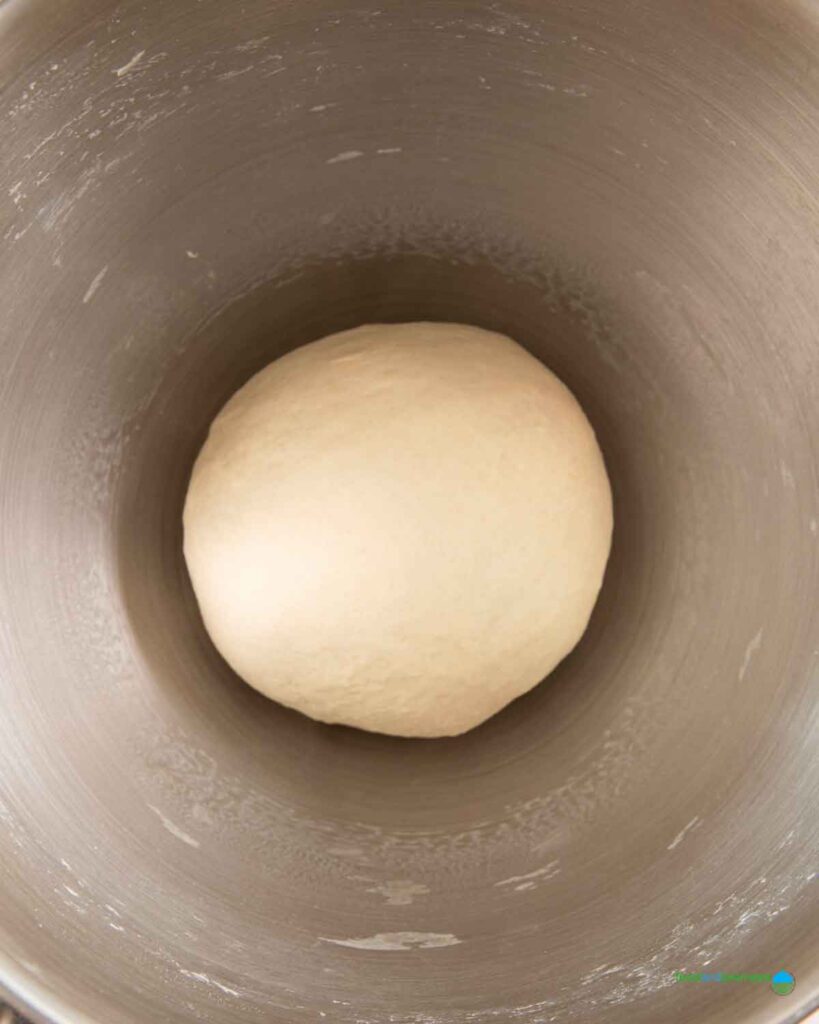
First proofing.
Mix all the ingredients in the bowl, then start kneading when you see a dough start to form.
Turn it into a smooth ball and place it in an oiled bowl.
Cover with a clean kitchen cloth and set aside until it doubles in size.
Prepare the filling.
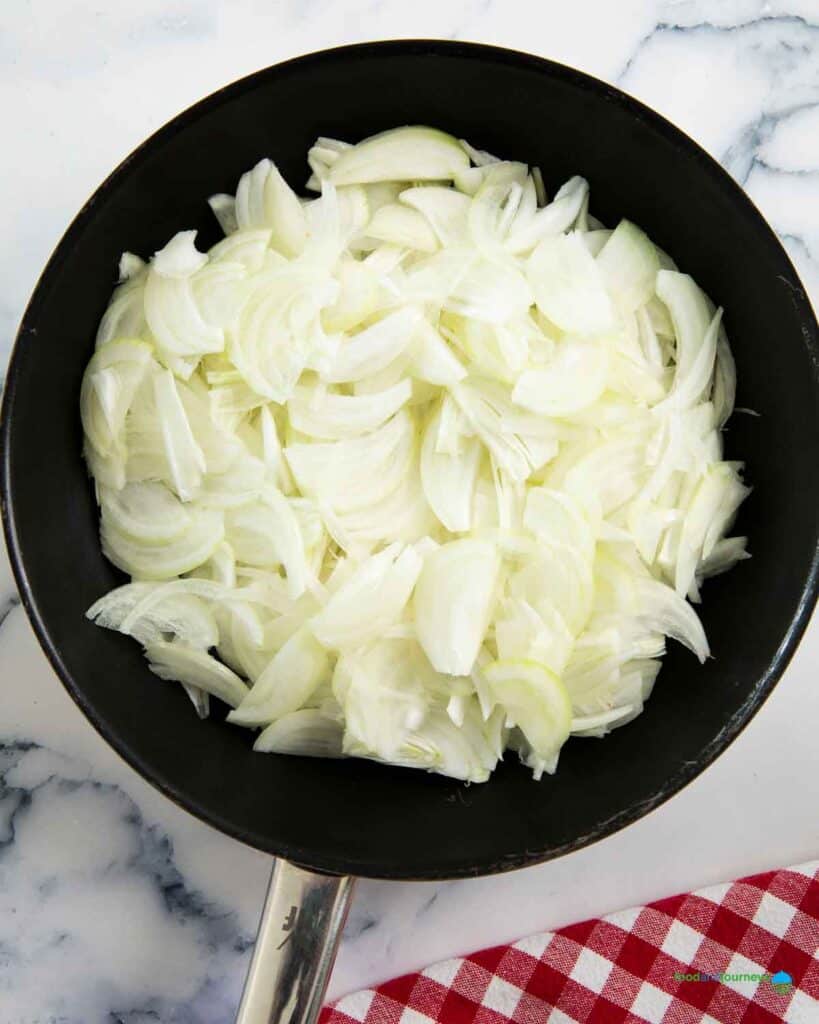
Heat the olive oil in a medium to large skillet over medium-high heat.
Add the chopped onions and saute until they have shrunk a bit.
Season the onions.
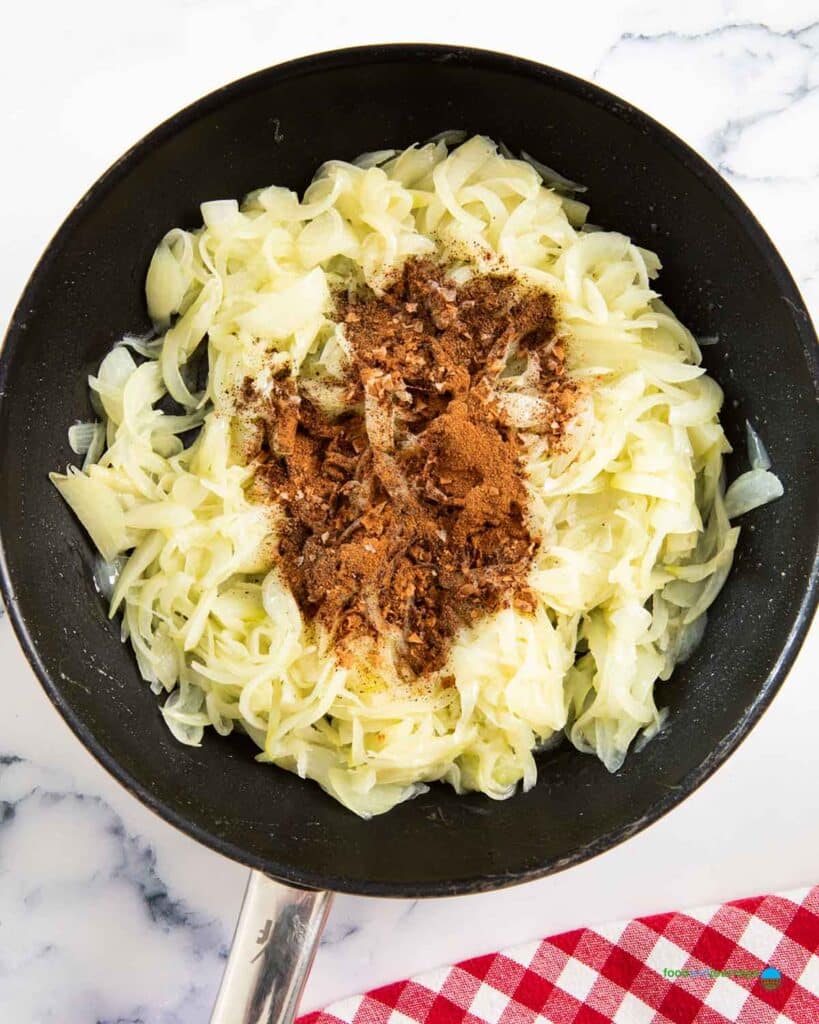
Add the cinnamon powder and ground allspice, and mix. Lower the heat for slow caramelization and to avoid burning the spices.
Make sure you mix the onions often.
Finish the filling.
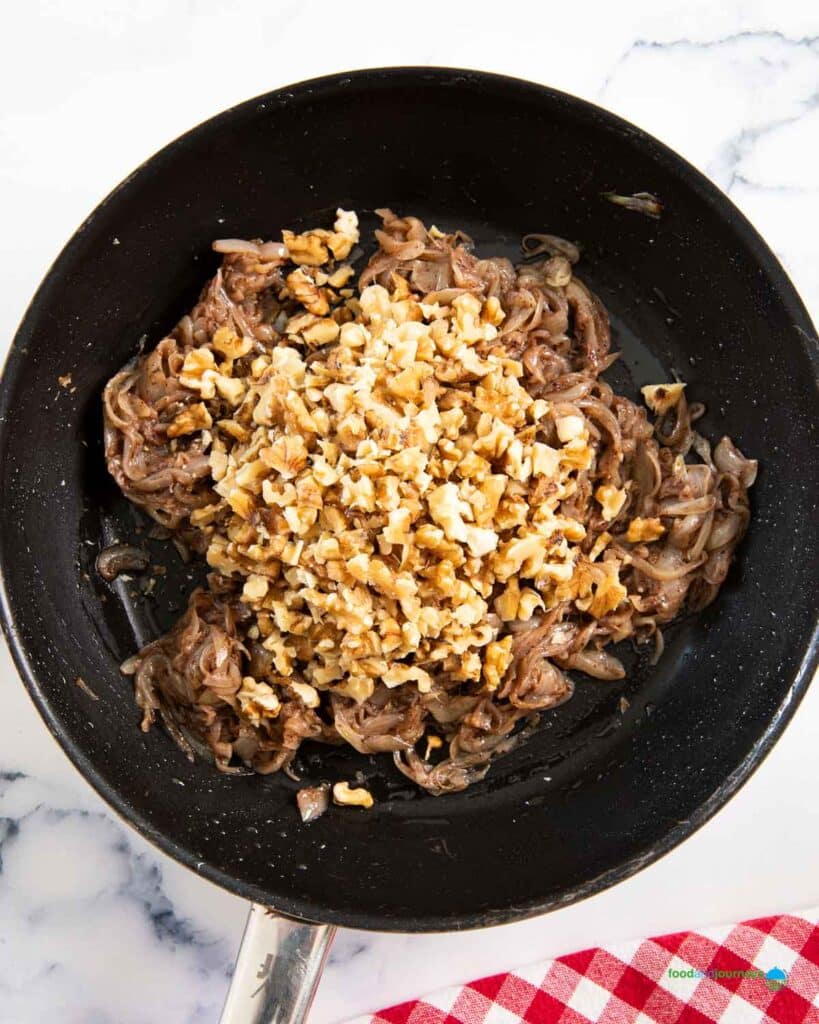
Continue cooking until the onion has completely softened and caramelized—it typically takes at least 45 minutes.
Taste and add salt to balance the filling’s overall flavor.
Add the toasted walnuts and mix.
Remove the skillet from the heat and set aside to cool the filling.
Assemble the stuffed bread.
By this time, the dough is twice its original size, so deflate it by punching it in the middle.
Divide the dough into 6 equal portions and do the same thing with the filling.
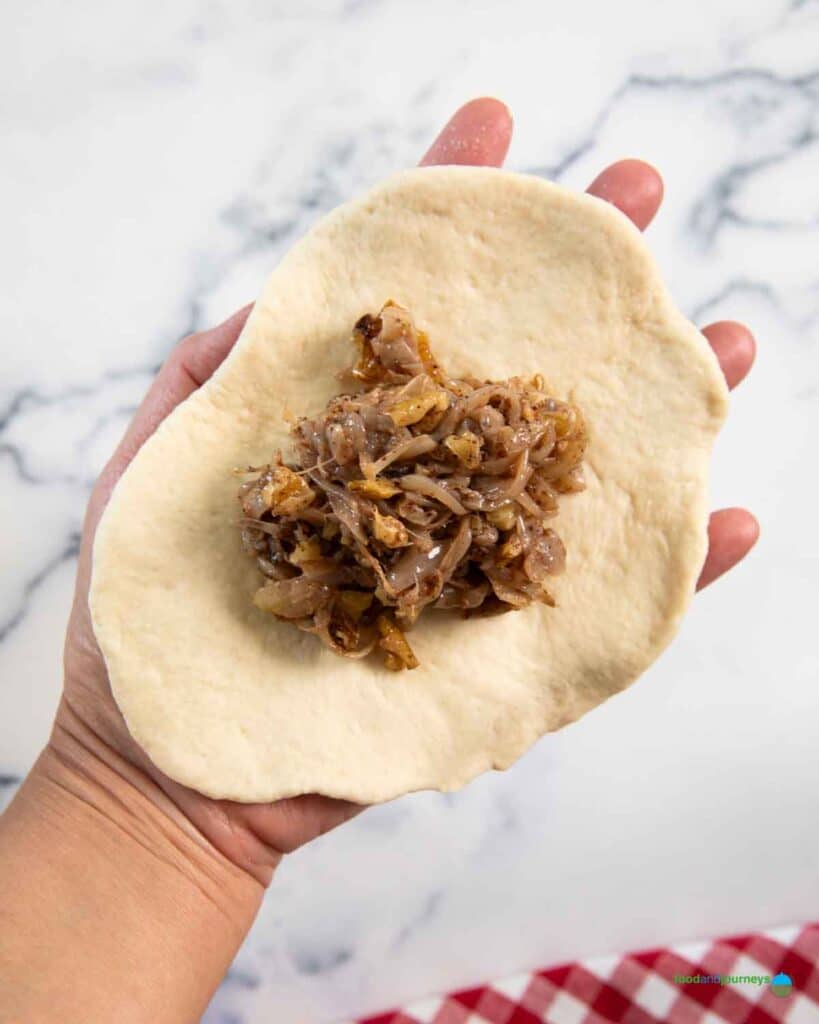
Flatten (roll) each portion of the dough (it should be big enough to accommodate one portion of the filling and allow for folding).
Place the filling in the middle and fold the sides to close the bun.
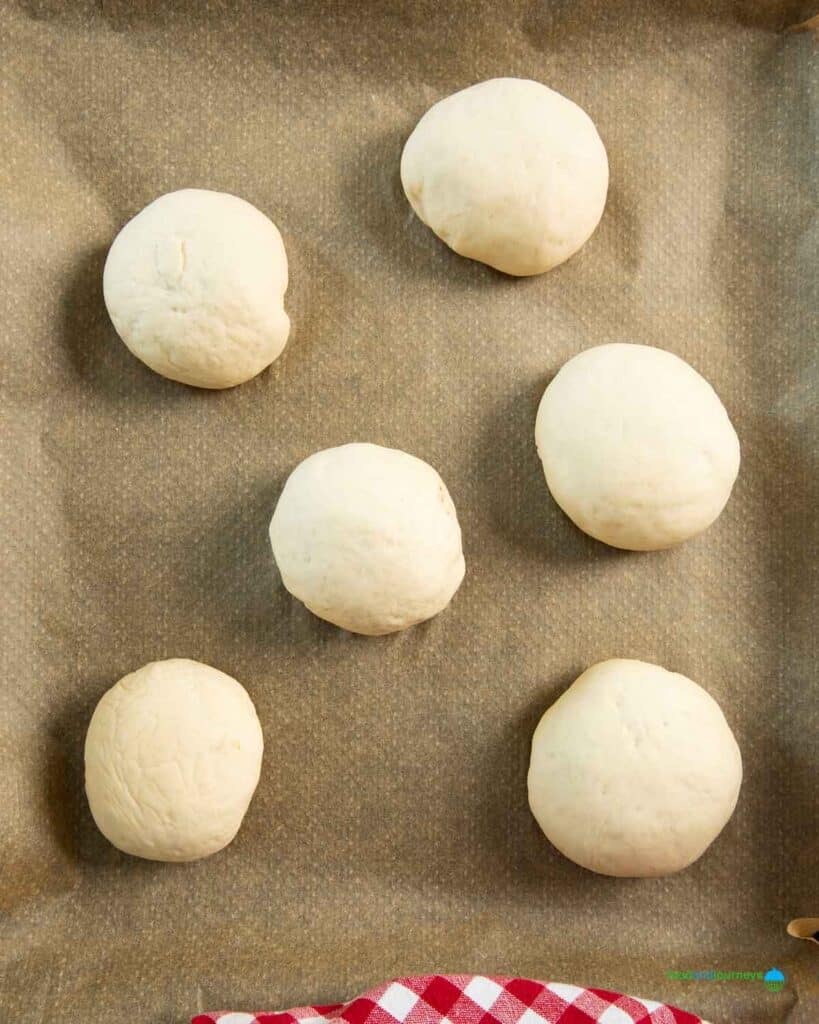
Second proofing.
Form it into a ball and place it on a baking tray lined with parchment paper, leaving some space between them.
Cover with the kitchen towel and set aside until the buns become puffy. This typically takes 30 to 45 minutes.
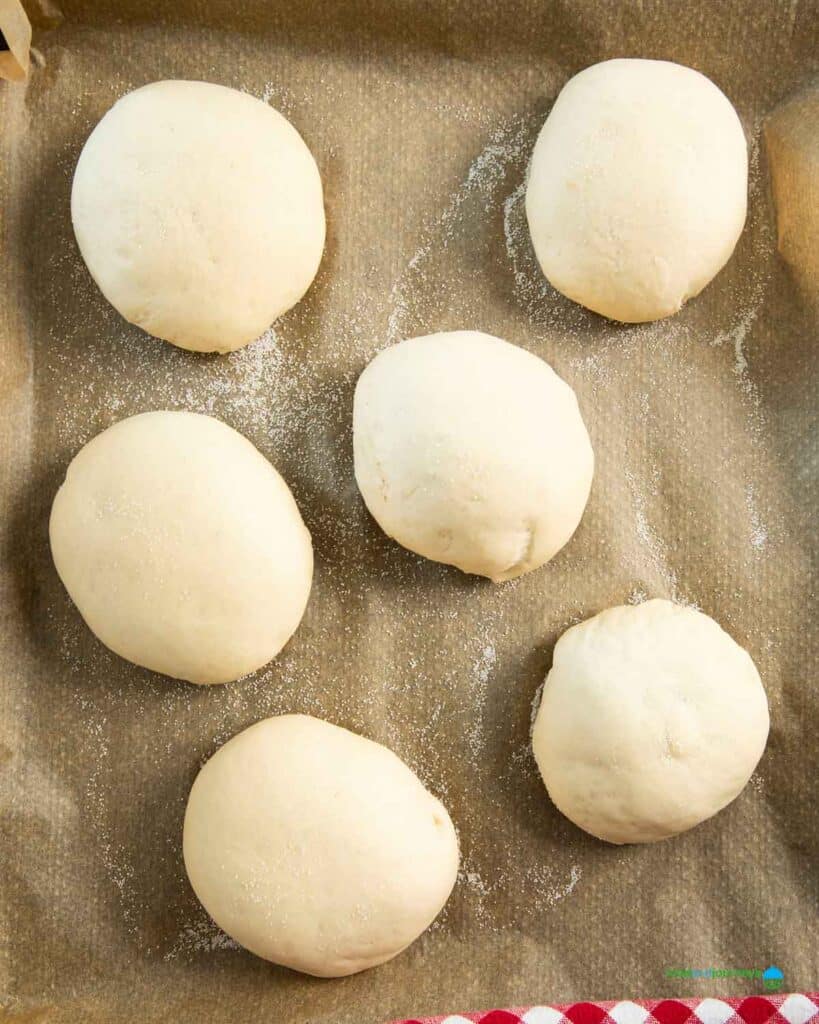
Ready for baking.
Preheat your oven to 200°C (375°F).
Sprinkle a bit of flour on your Lebanese onion and walnut buns.
Place them in the oven for 15 to 20 minutes or until they sound hollow when tapped on the side.
Remove them from the oven and transfer to a rack to cool — serve!

Helpful tips
- The dough is easy to handle; using your hands to knead it is absolutely manageable if you don’t have a stand mixer.
- Do not rush the cooking of the onions. Setting the heat to high typically makes the onion slightly bitter rather than sweet. So be patient.
- You can slowly add salt when caramelizing the onions, then taste at the end and add more salt, if required.
- When assembling the buns, you can use a small rolling pin to flatten the dough or use your fingers to roll each portion.
Recipe variations
- Red onions. It’s absolutely fine to use red onions. It will have a deeper color and just a tad sweeter, but it will work just as well.
- Other spices. You can also add sumac or 7-spice, but start with a tiny amount; it should enhance the filling’s flavor without overpowering it.
- Smaller buns. Feel free to make smaller buns if that’s what you prefer. Just be mindful of the filling-to-bread ratio.
Storage
How do you store Lebanese stuffed bread?
Make sure they’re completely cooled, then store the buns in an airtight container at room temperature — they will be good for up to 2 days.
For longer storage, refrigerate for up to 5 days or freeze for up to 2 months (tops).

FAQs
Is it a sweet or savory bread?
It’s primarily savory, but the slow-cooked onions add a natural sweetness to the bread.
The walnuts add a slightly earthy, mild bitterness that naturally balances the flavor — plus the crunch in every bite.
Why did my filling turn out bitter?
Bitterness usually comes from onions that were cooked too quickly or walnuts that were over-toasted.
Slow caramelization over medium-low heat is key to developing the onions’ sweetness.
Can I make them ahead of time?
Absolutely. You can either prepare the filling a day in advance and refrigerate it.
Or you can prepare the stuffed buns, refrigerate them, and just reheat in the oven until they’re warm and soft.
Serving suggestions
Not sure what to pair with Lebanese onion and walnut bread? These savory buns fit beautifully into a variety of classic Lebanese dishes, whether you’re preparing a mezze table or simply planning a family meal.
Try the following combo or look for more inspiration and explore the full collection of Lebanese recipes in the blog:

Pair the stuffed bread with a bowl of lemon lentil soup for a hearty combination.
The savory bun is also excellent for dipping and soaking up the flavorful soup.

The fresh parsley, tomatoes, and lemony dressing cut through the richness of the onion and walnut filling, while the stuffed bun adds a contrast that turns a simple salad into a complete lunch — or dinner.

Serve it as part of a mezze platter with traditional falafel, Lebanese pita bread, and smoky baba ganoush.
The soft, savory-filled buns balance the crispy falafel and creamy dip, creating a delicious, shareable spread perfect for gathering around the table.
Lebanese onion and walnut bread is proof that simple ingredients can create something truly special. With its soft bread and rich caramelized onion and walnut filling, it’s the kind of bake that feels both comforting and impressive at the same time.
So go ahead and try this recipe, and don’t forget to explore more Lebanese favorites on the blog to keep the flavors going!
GET MORE IDEAS FROM THIS LIST OF BREAD RECIPES FROM AROUND THE WORLD!
📖 Recipe

Lebanese Onion and Walnut Bread Recipe
Equipment
- Baking Tray (10.5 x 15.5 inches)
- Medium to Large Pan
Ingredients
Dough:
- 200 grams all-purpose flour (about 2 & 1/4 cups)
- 100 grams bread flour (about 2/3 cup)
- 1/2 teaspoon salt
- 3/4 cup milk, warm
- 1 tablespoon honey
- 1 teaspoon yeast, heaping
Filling:
- 4 tablespoons olive oil
- 4 to 5 medium onions (3 to 3 & 1/2 cups thinly chopped)
- 1 cup walnuts, toasted and roughly chopped
- 3/4 to 1 teaspoon ground allspice
- 1/2 teaspoon cinnamon powder
- salt, to season
Instructions
For the dough:
- Combine the yeast with warm milk, then set it aside until it becomes foamy.
- Combine the flour and 1/2 teaspoon of salt in a stand mixer bowl, or a regular bowl if kneading manually.
- Add the yeast mixture, honey, and 4 tablespoons of warm water, then mix.
- Start kneading when you see a dough forming.
- Turn it into a smooth ball and place it in an oiled bowl.
- Cover with a clean kitchen cloth and set aside until it doubles in size.
The onion & walnut filling:
- Heat the olive oil in a medium to large skillet over medium-high heat.
- Add the chopped onions and saute until they have shrunk a bit.
- Add the cinnamon powder and ground allspice, and mix — lower the heat to avoid burning the spices.
- Make sure you mix the onions often and continue cooking until the onions have completely softened and caramelized — this typically takes at least 45 minutes.
- Taste and add salt to balance the filling's overall flavor.
- Add the toasted walnuts and mix.
- Remove the skillet from the heat and set aside to cool the filling.
Assemble and bake:
- Punch the center of the dough to deflate.
- Divide the dough into 6 equal portions and do the same thing with the filling.
- Flatten (roll) each portion of the dough (it should be big enough to accommodate one portion of the filling and allow for folding).
- Place the filling in the middle and fold the sides to close the bun.
- Form it into a ball and place it on a baking tray lined with parchment paper, leaving some space between them.
- Cover with the kitchen towel and set aside until the buns become puffy. This typically takes 30 to 45 minutes.
- Preheat your oven to 200°C (375°F).
- Sprinkle a bit of flour on the buns.
- Place them in the oven for 15 to 20 minutes until they sound hollow when tapped on the side.
- Remove your tray of Lebanese onion and walnut bread from the oven and transfer it to a rack to cool — serve!
Notes
- Cook’s Tip: Do not rush the cooking of the onions. Setting the heat to high generally makes the onion slightly bitter rather than sweet.
- Refer to the post for more tips and suggestions.


Leave a Reply