
Spanish Chorizo and Potato Stew is a dish you should regularly make during these colder months. Locally known as ‘Patatas a la Riojana,’ Spanish, it’s easy to prepare, and flavor-packed in every bite — even the potatoes taste like chorizo. Delicious!

Whenever I’m in the mood for a quick Spanish-themed full meal, my go-to plan is — fried padrón peppers for the appetizer, patatas a la Riojana for the main, and magdalenas for dessert.
You can check the other two dishes later, but for now, we focus on the main dish: Patatas a la Riojana.
So, what is patatas Riojana?
It’s a dish that originated from La Rioja, a province in Northern Spain — hence ’a la Riojana.’
A stew that uses Spanish chorizo as its base and adds more smoked paprika to give it more depth.
Like Spanish beef stew, it’s not a complete dish without potatoes; in this case, the potatoes absorb all the chorizo and paprika flavors as well. Yum!
Spanish chorizo and potato stew can also be served as the first dish.
Either way, you will always get a delicious, flavor-packed serving on every plate. 🙂
Jump to:
Ingredients

(See the recipe card below for measurements.)
- Spanish chorizo – I always use spicy chorizo when I make this chorizo and potatoes recipe.
You can use the semi-cured (semi-dry) or cured ones; both will work because the sauce will keep them softer.
- Olive oil – extra virgin olive oil, if possible.
- Onion – red or yellow onions will be great, just remember to chop them finely.
- Garlic – minced or thinly sliced will work.
- Potatoes – starchy ones are great, but you can also use the waxy kind of potatoes if that’s what you have on hand.
- Bell pepper – deseeded, cored and chopped.
- Stock – chicken stock, generally. But feel free to use other meat stock or even vegetable stock.
- Salt – take it easy when adding salt. If your stock is already fully seasoned, plus the salt from the chorizo, you would only need to add a tiny bit.
- Smoked paprika – a staple in Spanish cuisine, you need to use sweet smoked paprika for making this chorizo and potatoes dish, or ‘pimentón dulce,’ as it’s locally called.

How to make patatas a la Riojana
Start by placing a medium to large pot over medium-high heat. (For reference, I’m using a pot that holds 4.2 liters).
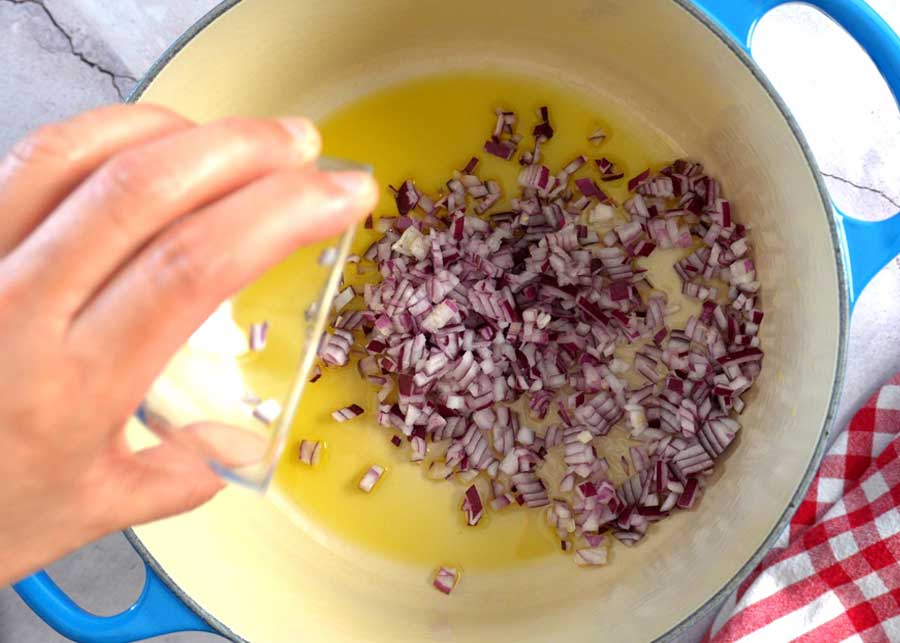
Pour the olive oil, and once it’s ready, add the finely chopped onion.
Sauté until they’re soft.
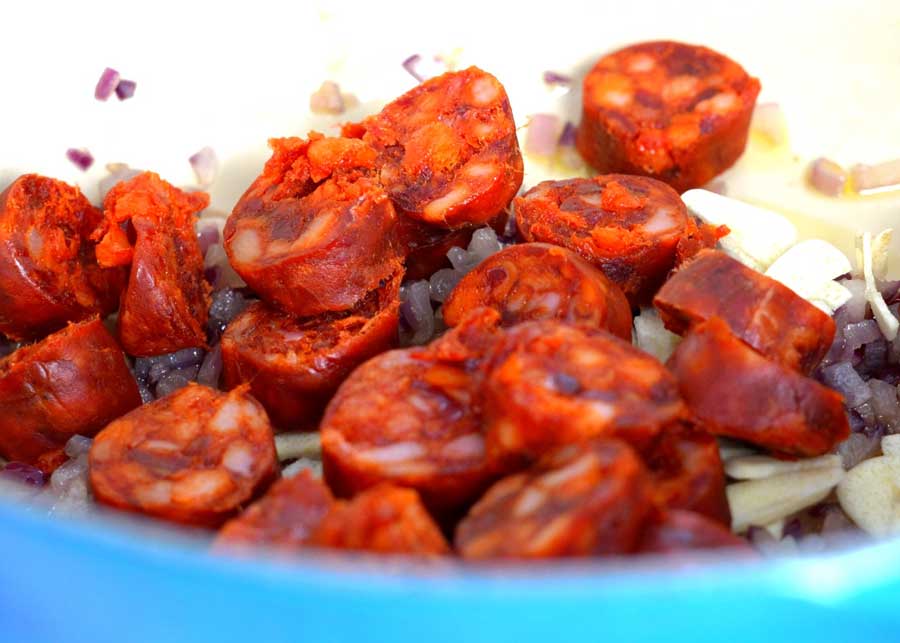
Add the garlic and the chopped chorizo.
Mix, then add the smoked paprika and a bit of salt.
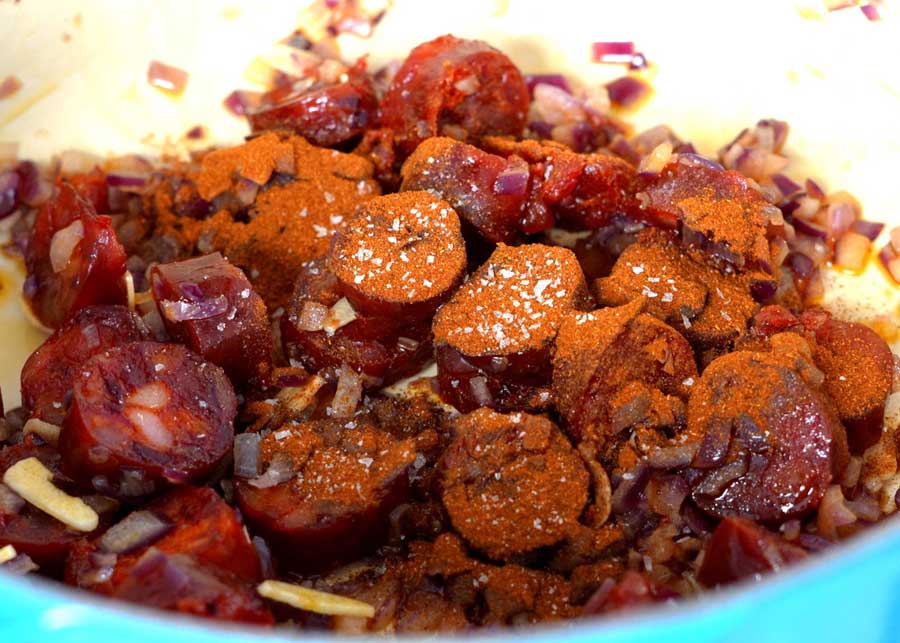
Make sure you lower the heat to avoid burning the spice.
Mix again to combine, coating everything with the smoked paprika.
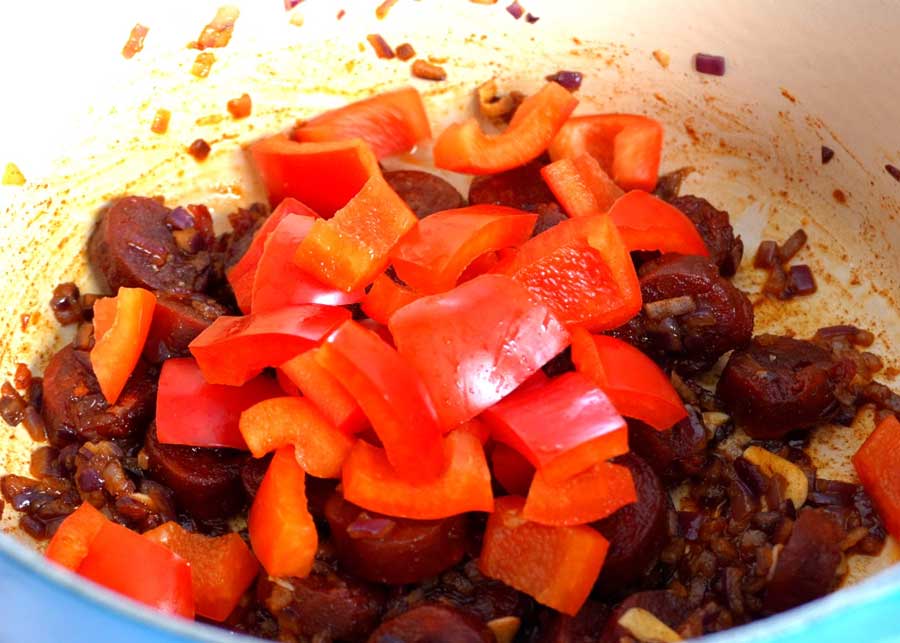
Add the red bell pepper.
Chop the potatoes by using a small knife halfway, then twisting the potato (or finish breaking it apart) with your hand.
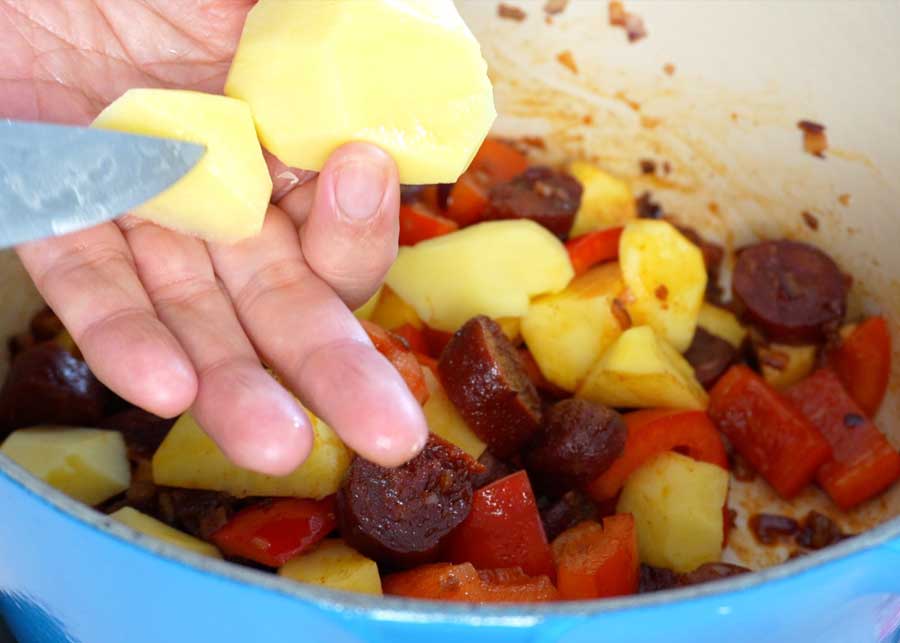
This is the traditional way of cutting the potatoes for this dish because the rough cuts impart more starch, making it creamier.
Pour the stock.
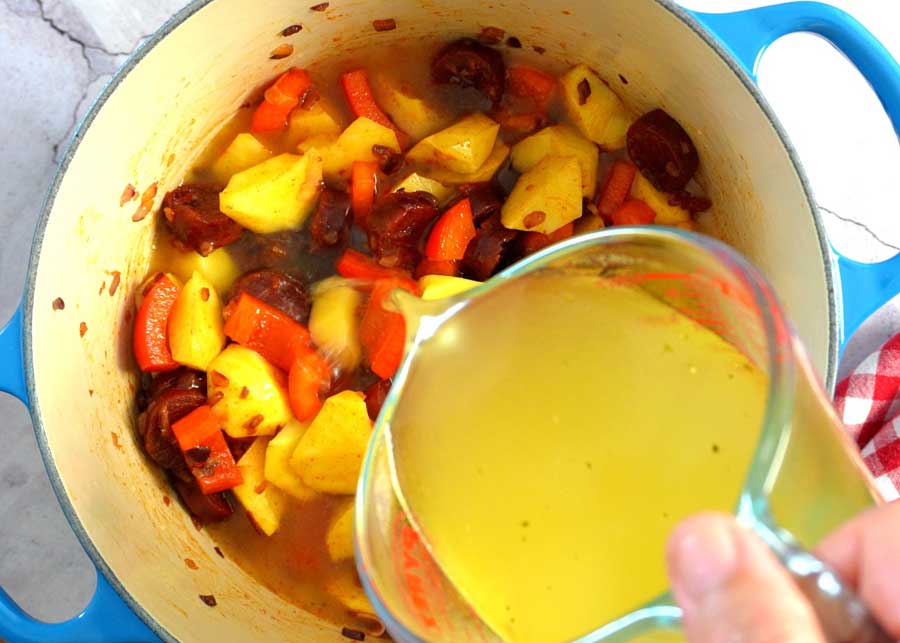
Cover with a lid, turn the heat up, and bring to a boil.
Then adjust the heat to low and continue simmering until the vegetables are tender.
Taste and adjust the seasoning by adding salt.
Transfer a small portion of potatoes into a bowl and mash roughly — then add them back into the stew.
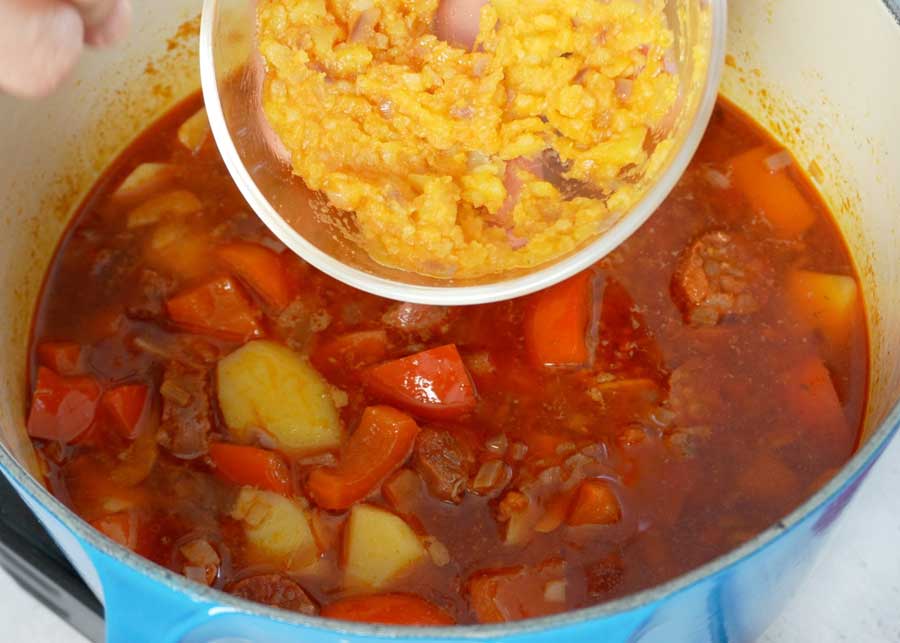
This extra step adds more creaminess to the dish.
Mix, then continue simmering until the vegetables are fully cooked.
Remove from the heat and transfer into bowls.
Garnish with fresh parsley, if desired — then serve!

Helpful tips
- Don’t pour all the stock at once. Instead, start with two cups, then add just enough to cover the chorizo and potatoes. Remember that it’s a stew, not a soup.
- In case too much liquid is left, keep it uncovered for at least ten more minutes while simmering.
- Taste your chorizo and potato stew before adding any seasoning.
You might need to add less salt, or just a tiny amount of smoked paprika, since the chorizo already provides enough smokiness for your taste.
Recipe variation
- Green bell pepper. If you like them, add them together with the red bell pepper.
- Water. Some people use water instead of stock because the chorizo and the smoked paprika are already excellent base flavors for the stew.
- Tomatoes. You can also add a handful of fresh tomatoes or canned crushed tomatoes — start with a third of a cup and adjust the seasoning accordingly.
- Mild or sweet chorizo. Of course, you can use it! 🙂
- Sherry vinegar. Do you want a hint of nuttiness? Then go ahead and add some sherry vinegar — once again, do it slowly, then adjust.
Storage
How do I store leftovers?
Refrigerate it in an airtight container, and it should be good for 3 days — but note that when you reheat it, you might need to add more stock (or water) to make the sauce less thick.
Can I freeze it?
You can, but the texture of the vegetables, particularly the potatoes, will change after reheating.
If that’s ok with you, then go ahead and place it in an airtight container and store it in the freezer.

FAQs
Is patatas a la Riojana spicy?
Not really. But if you are using spicy chorizo (like I typically do), then there will be a bit of heat when you bite into the chorizo.
It’s more smoky than spicy, because of the paprika that’s added directly into the stew, and coming from the slices of chorizo.
Can I make it without chorizo?
You can, but it would be a different dish — it would just be a potato stew.
What type of chorizo should I use?
Use the cured or semi-cured Spanish chorizo, not the Mexican chorizo. Note that there is a big difference in flavor between these two — the Spanish chorizo has a smoky flavor.
Serving suggestions
Tons of bread!
Toasted bread, baguette, country bread, sourdough? Whatever your favorite bread is. The key thing is that they will sop up a LOT of the sauce — and for cleaning your plate. 😉
If you want to pair it with more Spanish dishes, check out these other classic Spanish recipes:
- Spanish Marinated Eggplant and Peppers
- Berenjenas Rellenas (Spanish Stuffed Eggplants)
- Spanish Chocolate Cake
Yep, Spanish chorizo and potato stew is one of those rustic dishes that brings bold flavors and simple ingredients together in a delicious serving.
So if you enjoyed this recipe, be sure to explore more traditional Spanish cuisine in the blog — there’s always another delicious dish waiting to transport you straight to Spain.
GET MORE IDEAS FROM THIS LIST OF MAIN DISHES FROM AROUND THE WORLD!
📖 Recipe

Spanish Chorizo and Potato Stew Recipe
Video
Equipment
Ingredients
- 3 to 4 tablespoon olive oil
- 1 large onion, finely chopped
- 7 ounces Spanish chorizo (200 grams), chopped to about 1/2-inch thick
- 4 cloves garlic, minced
- 1 large red bell pepper
- 1 pound potatoes (500 grams), chopped into 1 to 1 & 1/2-inch
- 2 & 1/2 to 3 cups stock
- 1 teaspoon smoked paprika
- salt
Instructions
- Place a medium to large pot over medium-high heat — as a reference, I’m using a pot that holds 4.2 liters.
- Pour and heat the olive oil, then saute the onion until they’re soft.
- Add the garlic and the chopped chorizo, then mix.
- Add the smoked paprika and a bit of salt — make sure you lower the heat to avoid burning the spice.
- Mix again to combine, coating everything with the smoked paprika, then add the red bell pepper.
- Chop the potatoes by using a small knife halfway, then twisting the potato (or finish breaking it apart), with your hand — add them directly into the pot.(NOTE: This is the traditional way of cutting the potatoes for this dish, because the rough cuts impart more starch into the dish — making the sauce more creamy.)
- Pour the stock — just enough to cover the potatoes and the chorizo.
- Cover with a lid, then turn the heat up and bring to a boil.
- Adjust the heat to low and continue simmering until the vegetables are tender.
- Taste and adjust the seasoning by adding salt.
- Transfer a small portion of potatoes into a bowl and mash them roughly — then add them back into the stew.(NOTE: This extra step adds more creaminess to the dish.)
- Mix, then continue simmering until the vegetables are fully cooked.
- Remove from the heat and transfer into bowls.
- Garnish with fresh parsley, if desired — then serve!
Notes
- Cook’s Tip: Ensure you don’t pour all the stock at once. Start with two cups, then add just enough to cover the chorizo and potatoes.
- Refer to the post for more tips and suggestions.


Leave a Reply