
German Pea Soup (Erbsensuppe) is a classic German soup made with dried peas, vegetables, pork, and sausage. Creamy, thick, and absolutely delicious, it’s a staple in German households, especially during colder months. So go ahead and experience a taste of German tradition in your own kitchen!
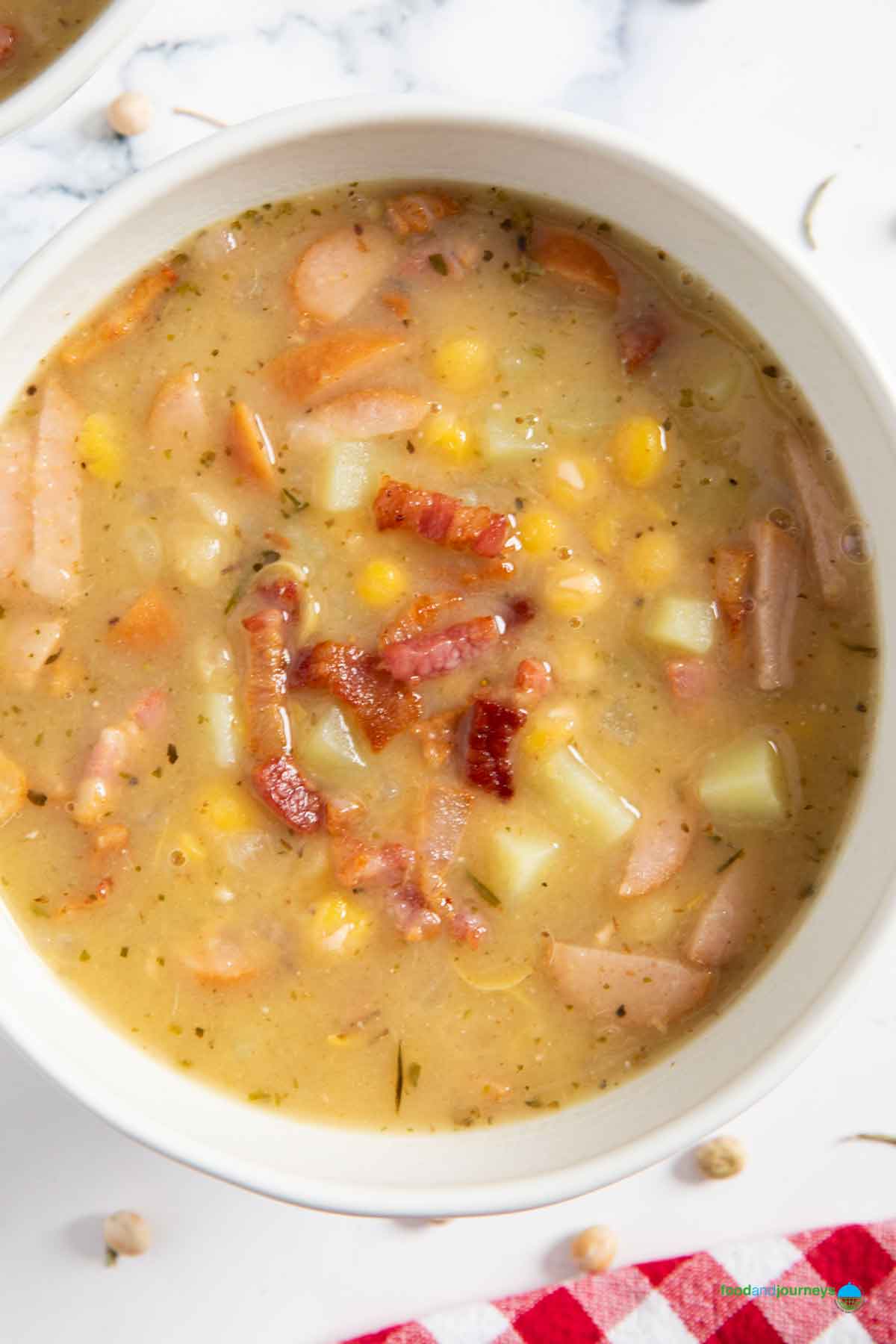
German pea soup is one of those well-loved soups across Germany.
Every region has its own way of making it — some use dried split peas, while others use dried yellow peas, which is what I prefer to make in Stockholm.
Unlike German goulash soup, erbsensuppe is not watery because it uses flour as a thickener, as well as pureeing a portion of the peas and potatoes.
What you have instead in the end is flavor-packed pea soup that’s thick and filling — serve it with some bread and butter, and you already have a meal on hand.
But of course, you can also serve it with other classic German recipes to complete the experience. 🙂
Jump to:
Why this German soup is a keeper!
- Deeply traditional. Erbsensuppe is a classic dish rooted in German home cooking and long-standing soup traditions.
- Even better the next day. Like many German soups, the flavors deepen over time, making it excellent for leftovers and make-ahead meals.
- Perfect for cold seasons. It’s a staple of German cuisine across all regions of the country, and it’s especially popular during the autumn and winter seasons.
Ingredients
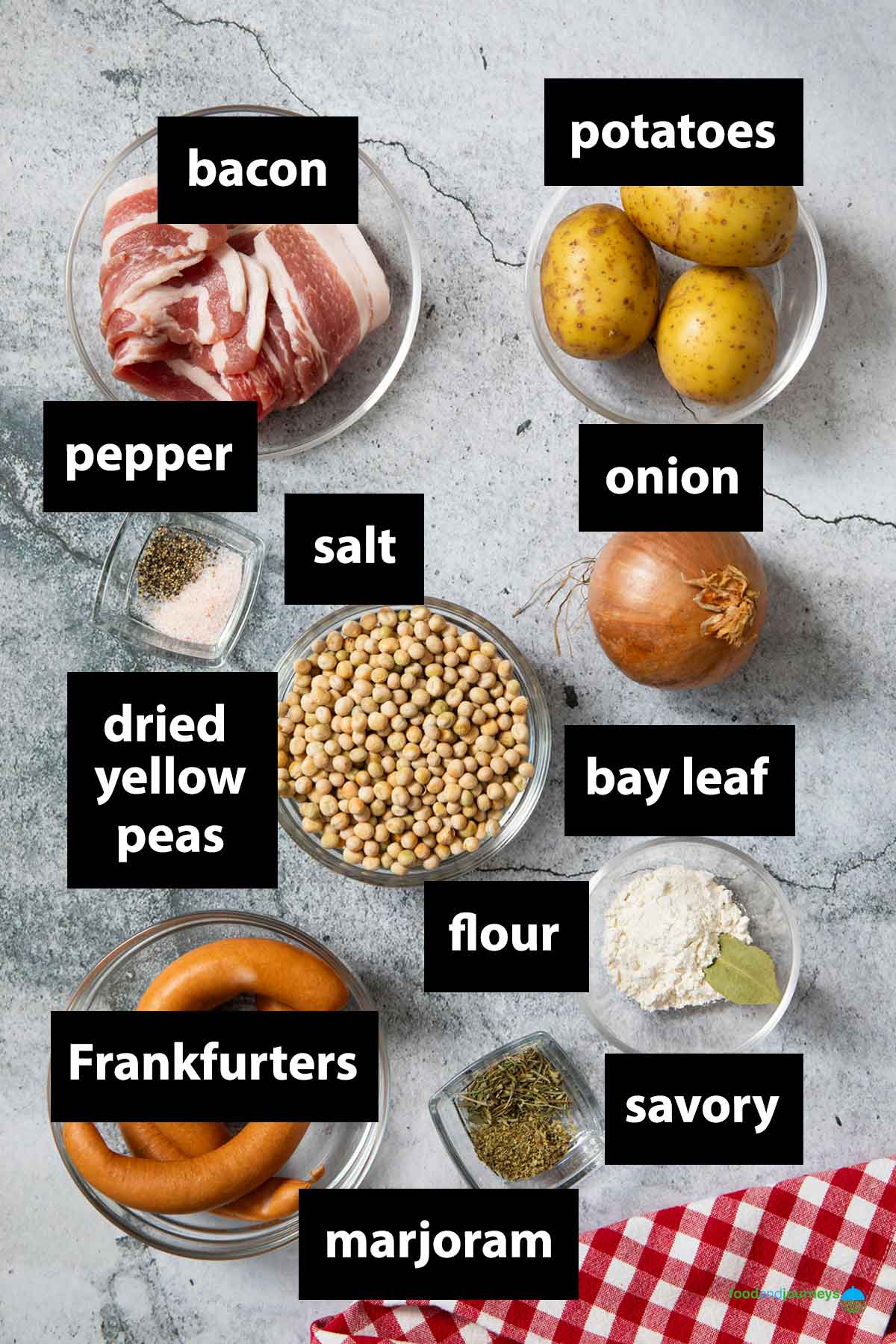
(See the recipe card below for measurements.)
- Bacon – smoked bacon, to be specific, and chopped no more than ½-inch (2-cm) in width. If you have tried my sauerkrautsuppe, you would know exactly how to use bacon for this soup recipe. 😉
- Onion – chopped finely so they disappear into the soup once you finish cooking.
- Dried yellow peas – you can either use whole or split peas. I tend to use whole, dried yellow peas because that’s what I’ve always had when we were living in Frankfurt.
- Potatoes – peeled and chopped into small cubes.
- Flour – you need this to help thicken the liquid in your erbsensuppe.
- Frankfurters – you can either slice or add them whole when serving your German soup.
- Herbs and seasoning – just use your favorite brand for dried marjoram, savory, bay leaf, salt, and pepper.

How to make erbsensuppe

Start by soaking the dried peas overnight.
The next day, rinse the soaked peas and place them in a medium saucepan with a piece of bay leaf and 5 cups of water.
Cover with a lid and bring to a boil.
Lower the heat and simmer for at least an hour, or until the peas are slightly tender.
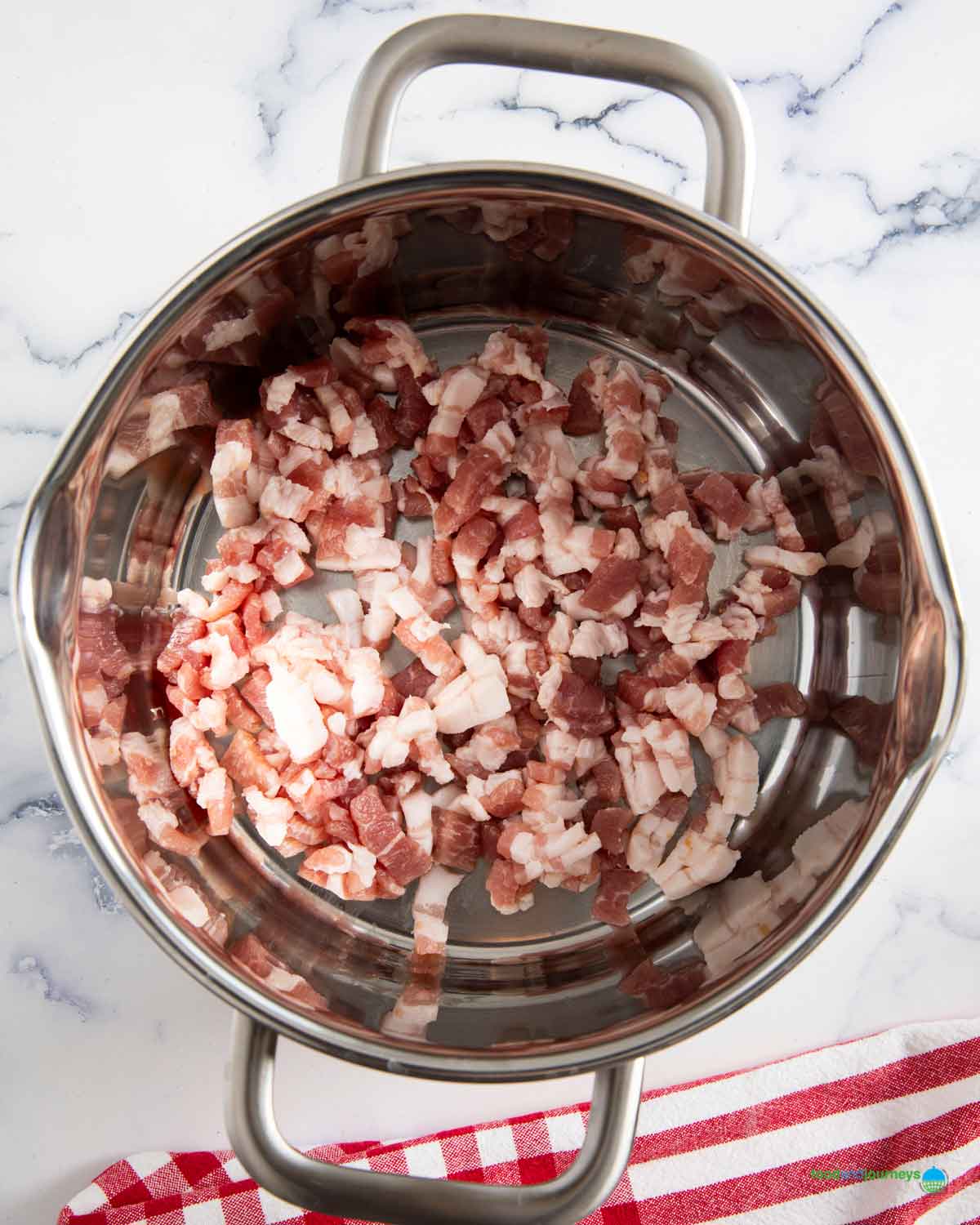
Add the chopped bacon to another medium to large saucepan and fry it over medium-high heat until it turns brown and crispy.
Transfer to a plate lined with a kitchen towel to absorb excess oil, then set aside.
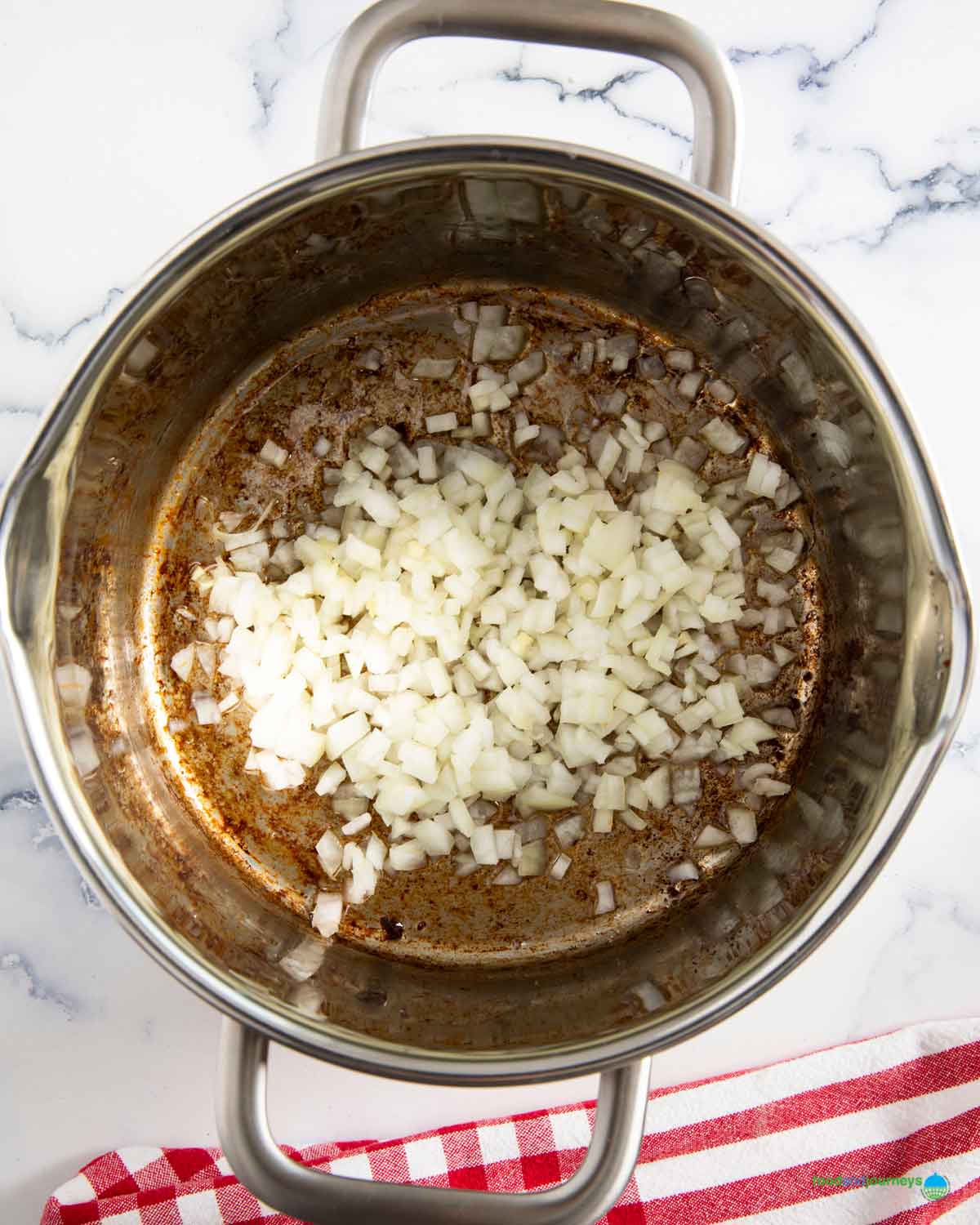
Using the same pan (and the bacon oil), saute the onion until soft.
Add the potatoes and cook until they turn translucent — about 4 to 5 minutes.
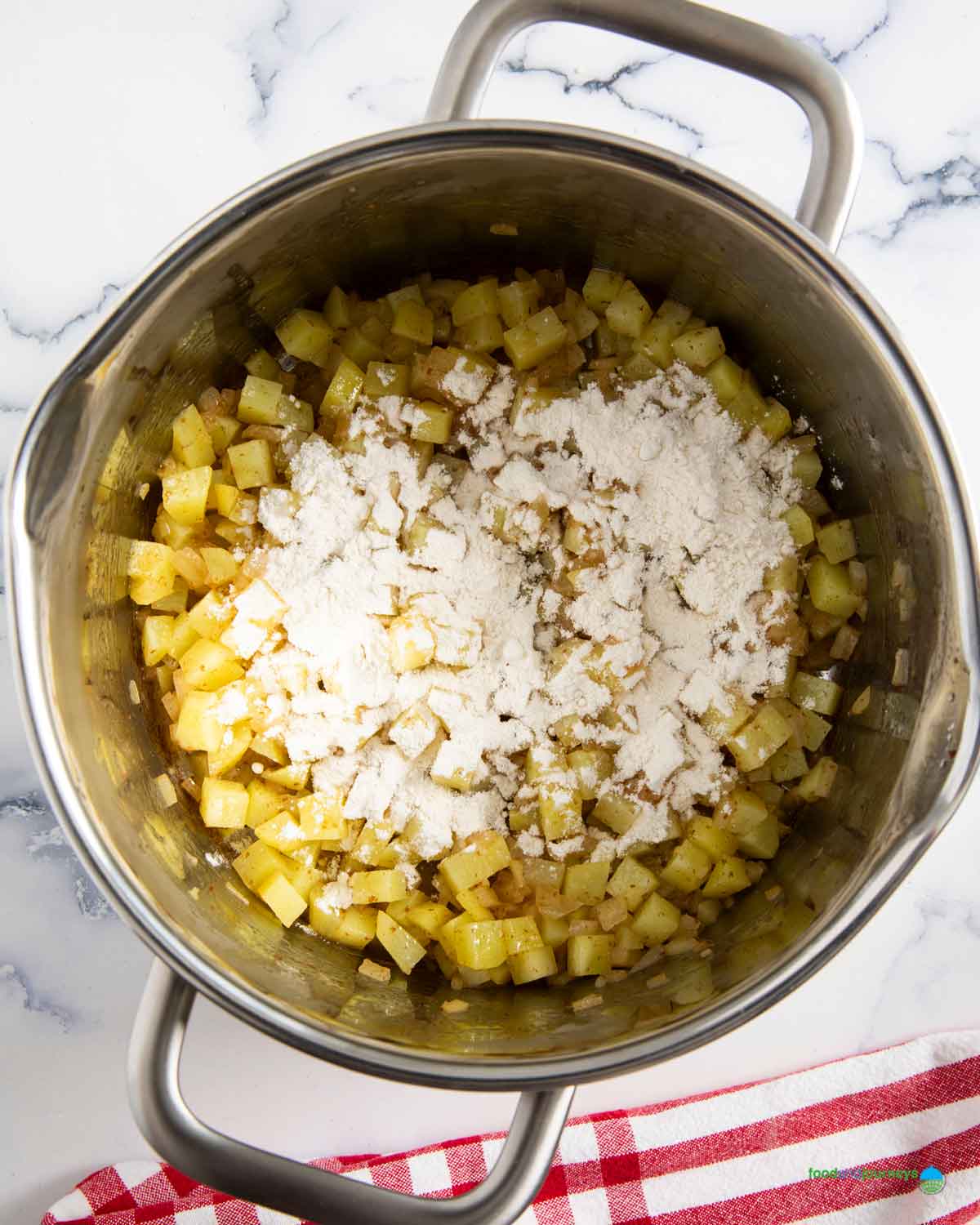
Sprinkle the flour and mix until it’s slightly brown and evenly absorbed by the potatoes and onion (typically takes no more than 5 minutes).
Feel free to lower the heat to prevent the flour from burning.
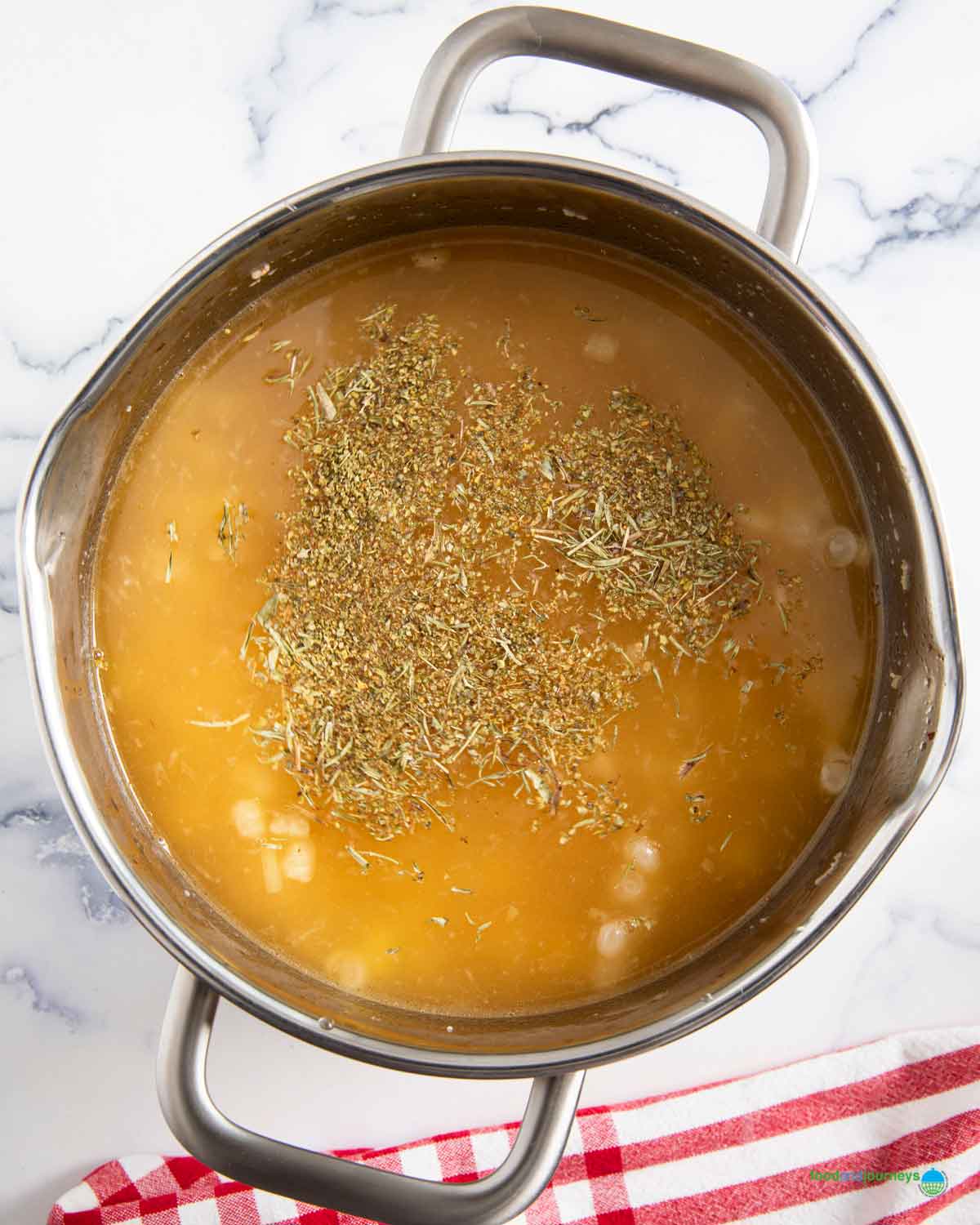
Pour the tender peas and their cooking water into the saucepan with the potatoes; keep the bay leaf in there.
Add the dried marjoram, savory, salt, and ground black pepper.
Continue simmering for another 30 minutes, or until the peas are soft enough to eat, but still keeping their shape.
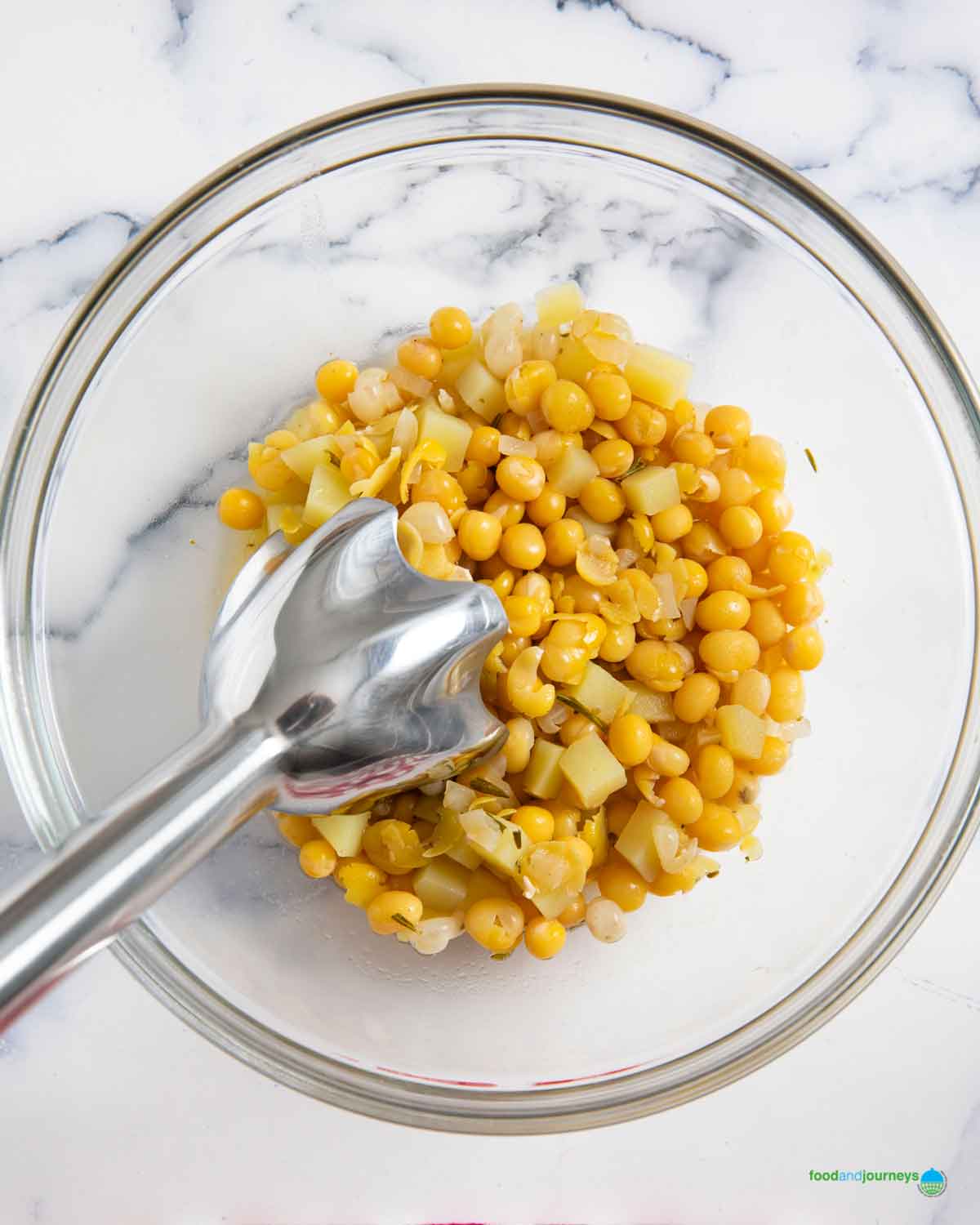
Remove about a third of the peas and potatoes and place them into a bowl.
Use an immersion blender to puree the mix.
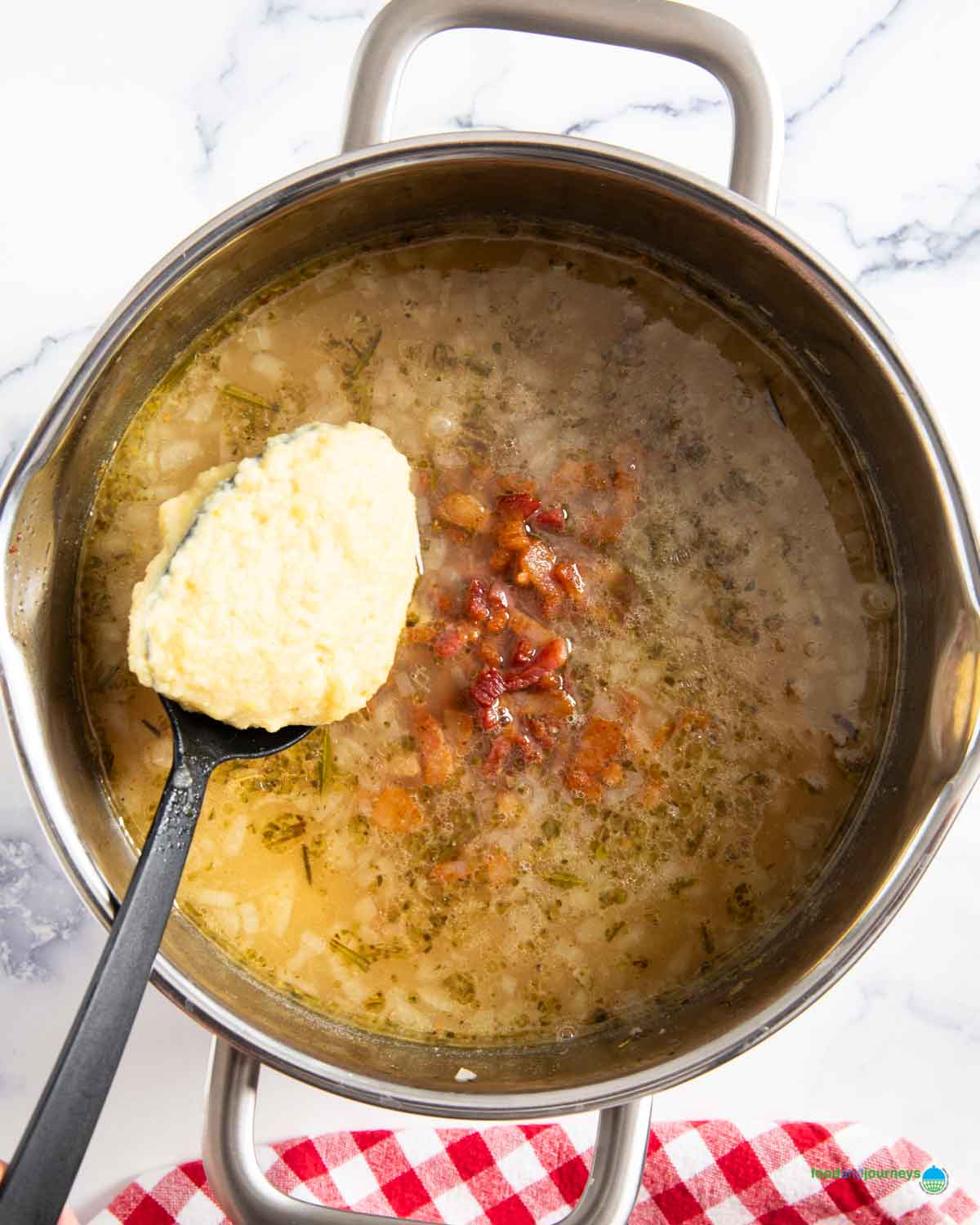
Place the pureed peas and potatoes back into the soup, together with some of the bacon bits (fried earlier).
Mix, taste, and adjust seasoning by adding salt and pepper.
Add the chopped frankfurters, mix, cover with a lid, and continue cooking for a few more minutes to heat the sausage slices.
Take the saucepan off the heat and transfer your German pea soup to bowls for serving — garnish with more bacon, if desired.

Helpful tips
- Do not rush the process of cooking the flour by turning the heat up. It will most likely result in the flour burning. Keep the heat low and keep stirring until the color changes.
- If the cooking liquid from the softened peas is no longer hot when you pour it into the potatoes, bring it to a soft boil first, then simmer until the peas are completely softened.
- Although German pea soup is traditionally thick in texture, you can lighten it a bit by pureeing less than what’s indicated in this recipe.
- Feel free to add more liquid if you feel that 5 cups of water is not enough.
Recipe variation
- Meat. Aside from bacon, you can also use smoked pork, ham hock, or German sausages. Some regional versions typically use different cuts, sometimes even omitting meat entirely.
- Frankfurters. Some locals slice them and add them into the soup, as I did in this recipe, and some prefer to add the whole sausage to the plate when serving — you can try both and then decide which one you like.
- Thyme. If you cannot find savory in your part of the globe, dried thyme is an excellent alternative. Quite understandable that it’s hard to find because it’s a traditional German (and northern French) herb.
But if you have it, try making this German green bean soup as well — one of the most popular recipes on the blog. 🙂
Storage
Make sure you keep it in an airtight container, and it will be good for 3 to 4 days in the refrigerator.
If you want to keep it longer, place it in the freezer — it’s one of those soups that freeze well.
Let it cool completely before freezing, and when reheating, do it gently, adding a bit more water (and seasoning) if desired.

FAQs
Can it be vegetarian?
Absolutely.
While many locals prefer meat, vegetarian versions are common nowadays and rely on vegetables and a mix of herbs for flavor.
What makes German pea soup different from other pea soups?
While there are similarities in pea soup across the Nordics and Central Europe, the German version is usually thicker and more rustic than other European soups.
Serving suggestion
Traditionally, it’s served with rustic sides that reflect German home cooking and comfort food traditions.
For a well-rounded experience, check out these classic ways to enjoy erbsensuppe alongside other traditional German recipes — creating an authentic German meal in your home!

As a starter before a hearty meal, serve smaller portions of erbsensuppe before dishes like German beef goulash or classic flammkuchen.
With these dishes, you can create a traditional, German-inspired multi-course meal.

If you want a bit of contrast, pair it with a fresh salad.
Gurkensalat or German Carrot Salad are both excellent for that lightness and for rounding out the meal.

German pea soup is often enjoyed with sausages on the side (and sometimes served directly in it).
For a more filling, authentic pairing, get those currywurst and ketchup ready — absolute yum!
So whether you’re exploring traditional German cuisine or simply craving a hearty, comforting soup, this German pea soup recipe is well worth trying.
Simple and filling, it’s a recipe you’ll come back to again and again.
GET MORE IDEAS FROM THIS LIST OF INTERNATIONAL SOUP RECIPES!
📖 Recipe

German Pea Soup Recipe (Erbsebsuppe)
Equipment
- Medium and Large saucepans (with lids)
Ingredients
- 250 to 260 grams dried yellow peas (about 1 cup)
- 200 to 225 grams smoked bacon (7 to 8 ounces) chopped into ½-inch or 2-cm thick
- 1 large onion, finely chopped
- 2 tablespoons flour
- 3 medium potatoes, peeled and cut into small cubes
- 1 piece dried bay leaf
- 1/2 teaspoon dried savory
- 1/2 teaspoon dried marjoram
- frankfurters, about 1 cup when chopped
- salt and ground black pepper, to season
Instructions
- Soak the dried peas overnight, then rinse and place them in a medium saucepan.
- Add 5 cups of water and a bay leaf, then cover and bring to a boil; reduce the heat and simmer until the peas are slightly tender.(NOTE: Typically takes at least an hour).
- In a separate medium- to large-sized saucepan, add the chopped bacon and fry it over medium-high heat until it turns brown and crispy.
- Remove the crispy bacon bits from the pan and transfer them to a plate lined with a kitchen towel to absorb excess oil, then set aside for later.
- Using the same pan (and oil from bacon), saute the onion until it softens.
- Add the potatoes and cook until they turn translucent — about 4 to 5 minutes.
- Sprinkle the flour and mix until it’s slightly brown and evenly absorbed by the potatoes and onion (typically takes no more than 5 minutes). Feel free to lower the heat to prevent the flour from burning.
- Pour the tender peas and their cooking water into the saucepan with the potatoes; keep the bay leaf in there.
- Add the dried savory, marjoram, salt, and ground black pepper.
- Continue simmering for another 30 minutes, or until the peas are soft enough to eat, but still keeping their shape.
- Remove about a third of the peas and potatoes and place them into a bowl.
- Use an immersion blender to puree the mix.
- Place the pureed peas and potatoes back into the soup, together with some of the bacon bits (from earlier).
- Mix, taste, and adjust seasoning by adding salt and pepper.
- Add the chopped frankfurters, mix, cover with a lid, and cook for a few more minutes to heat the sausage slices, then take the saucepan off the heat.
- Transfer your German pea soup into bowls and garnish with more bacon, if preferred—serve and enjoy!
Notes
- Cook’s Tip: Add more water if you think 5 cups is not enough, and remember to taste and adjust the seasoning accordingly.
- Refer to the post for more tips and suggestions.




Leave a Reply